


Interview with ACCF staff: Lucy Debrion
As part of our efforts to strengthen connections between the African Climate Change Fund Secretariat, and project beneficiaries, individuals, as well as organizations interested in climate issues, we will use this section of our newsletter to enlighten our partners with profiles of ACCF staff.
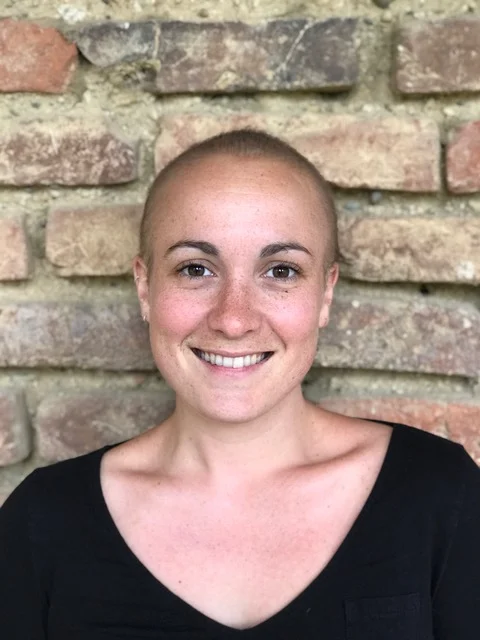
Let’s meet Lucy Debrion, a Portfolio Officer at the Africa Climate Change Fund since 2017. Lucy holds a Master’s degree in International Business and a specialized MBA in Strategic Management of Sustainable Development Programs.
She has a sister Alice and a three-year-old niece named Leonie. Lucy’s mother Catherine is a kindergarten director in France, having worked in Togo, and Mauritania. Her father was the director of the French Cultural Center in Togo and Mauritania.
Lucy, tell us why you joined the African Development Bank’s ACCF
I grew up in Togo and always wanted to give back to Africa, a continent that gave me life lessons for 10 years. It was crucial and “normal” to have a job that allowed me to support the community, by preserving the environment and saving lives. I like to say that I work for humans before saying that I work on climate change for Africa. I believe we must protect our planet’s biodiversity to safeguard the future of our ecosystems, our climate, our health henceour humanity!
Describe your experience working with the Bank. How should an external person picture a Bank employee like you?
I really love my job and do not picture myself without it. I started working at ACCF in 2017 and learned a lot from the first coordinator, Louise Helen Brown. The days are never the same, as we handle several projects all over Africa. We do capacity building; we handle procurement process supervision as well as provide guidance through the disbursement rules of the bank. We also launch a Call for Proposals and make sure we report on our projects through an annual report available for all internet users each year.
What I like at the Bank is that we are all working together even if we are with different funds, meaning we can always have our colleagues to assist us when needed.
Briefly describe the projects you are currently working on and if you’re planning any missions
I am working on a few projects targeting access to climate finance from our CFP1, especially international climate funds like GCF, AF, or GEF. An example, is the project entitled: “Enhancing climate Finance readiness in Côte d’Ivoire,” which successfully developed a full proposal to mobilize USD 6
million from the Adaptation Fund for the project is Increasing Rural Communities’ Adaptive Capacity and Resilience to Climate Change in Bandama Basin. Further, two concept notes are to be submitted to the GCF on bioenergy production for USD 27.6 million and an Early Warning System for USD 45million.
On the CFP2, my projects are more focused on adaptation to climate change, and decentralization. I am looking forward to the implementation of the project of the CFP3, which will target gender resilience and equality and climate change, entrepreneurship, and gender equality, a subject I am particularly interested in. There is also the project for African youth, high on both the international and African agenda, one of the High-Five priorities of the Bank. It has been identified as a cross-cutting issue for the ACCF, and I am grateful to be able to contribute to this as I believe women and youth are the backbones of the African economy, yet accessing financing is still an ordeal. We can’t afford to leave women entrepreneurs behind. The ripple effect of women and youth’s success contributes directly to the local economy and improves the quality of life across their community.
What criteria do the ACCF evaluators consider when selecting a fundable project?
The project should be in line with the ACCF work program and the call for proposal. Also, we have independent climate change experts who review our projects including a two-step process assessing the concept note and then assessing the full proposals.
The projects need to be aligned with NDCs, and other national strategies as well as the Bank and ACCF priorities. Then, we examine the climate change formulation and theory of change, the logical framework, and the implementation strategy. Another important criterion is the sustainability of the project, to make sure it will have a long-term positive impact even after the closing date. We are not alone in this process, as our ACCF technical committee made up of several experts within the Bank also reviews and provides insightful comments to have the best version of the project possible.
What are the most exciting aspects of your job? Why? What are the most challenging ones? Why?
I have closed a few projects, and I am glad to see the progress we have made, and all the lessons learned. Under the dynamic management of Rita Effah, the ACCF Coordinator, the Fund has really grown and is now targeting subjects that I have always been passionate about like gender, and climate resilience. We now have the Demand Driven Window, to give potential beneficiaries that are unable to meet the criteria under the Fund's traditional Call for Proposals to benefit grants the opportunity to apply. I think something complicated for ACCF is that we have a qualitative long-term objective. Defining and quantifying the target climate change-related objectives in terms of getting projects approved by the international climate fund causes some uncertainty and difficulty in measuring progress towards and achievement of these objectives.
How have you managed the stress of tight deadlines?
I think my point of view has grown and evolved since I started working for ACCF some years ago. I have always been deeply involved with my projects, and I realize that there is no urgency per se. We all have stressful moments and strict deadlines, but nothing is truly urgent as my project coordinators and the ACCF coordinator always support me to find a suitable solution. There is always a solution. Not all urgency is bad, however – the problem is when everything feels urgent. I organize myself in a way that I can get an answer and produce last-minute documents easily.
Tell us about a time something went wrong in a project you were managing and how you fixed it.
When we implement projects, we often face some delays. When I first arrived at the ACCF there were only three of us, and shortly after my arrival only two. I had to handle issues like payment and procurement. And I started training myself more and more thanks to the ACCF Coordinator and the AfDB training program. I had to fix some major delays in one project. The success of how it was fixed is collective, as I realized that those delays were on the side of procurement. Indeed, those procurements were essential to implementing the major activities of the project including the recruitment of a consultancy firm and an individual consultant. When we facilitate recruitment by working along with the project and AfDB procurement specialists we
succeeded to implement the main activities and did not get any more delays.
What were your most successful missions? Why?
To be honest, we try not to go too much on a mission, instead, we rely on our colleagues based in the country of the project. This way we try to lower our GES emission and rely on the expertise of our colleagues. To answer your question, the most successful mission happened in May 2022 in Senegal. We combined one mission with two objectives: a supervision mission of an ongoing project and a pre-launching mission to assess the potential of a shortlisted ACCF project from the second call for proposals. We talked about the ongoing project with the team, consortium partners, and beneficiaries. It helped us to readapt and readjust some activities, and make sure we were on the same page for the remaining activities.
For the other project, we succeeded to clarify some of the elements of the full proposal and explain the full ACCF approval process. This way the project could be prepared for future requests from our technical committee.
Describe your most challenging missions and give reasons
One of my projects experienced serious delays causing us to launch a supervision mission back in March 2019. Although, our face-to-face meeting with the team was of helpful to remove barriers that had present for several months. Unfortunately, even after this mission, the project could not ensure the delivery of the objectives of the fund, so it was canceled. ACCF projects are small financially, but the work to be done so that the project can be implemented smoothly necessitates missions like this one regularly.
Can you propose ways of curbing such challenges? Any recommendations?
One of the recommendations would be to have this kind of mission every 6 months for the most difficult projects, or every year, for projects that progress slowly.
How can recipients of ACCF-financed projects improve their working relations with the ACCF?
I think it’s not just an ACCF recipient job but a two-way job as we are working in collaboration with all our project coordinators, colleagues within the ACCF secretariat, and other AfDB departments. To be more efficient in terms of project implementation, I believe organization is the key, as well as
communication. It is important for the ACCF secretariat to provide clear guidelines regarding the timeframe to improve the monitoring of the activities.
In terms of communication, I believe it is crucial to have weekly supervision calls with all project teams as it will help document the progress and apply the lessons learned to encourage improvement in best practices for future projects.