


Africa Climate Change Fund hosts Gender Transformative Climate Change Adaptation training
The Africa Climate Change Fund (ACCF) has organized a three-day training on Gender Transformative Climate Change Adaptation.
The training is part of the Fund’s technical assistance to 10 grantees, mostly civil society organizations, set to receive grants totaling $8.2 million to implement their projects. ACCF funds grants range from $250,000 to $1 million per project.
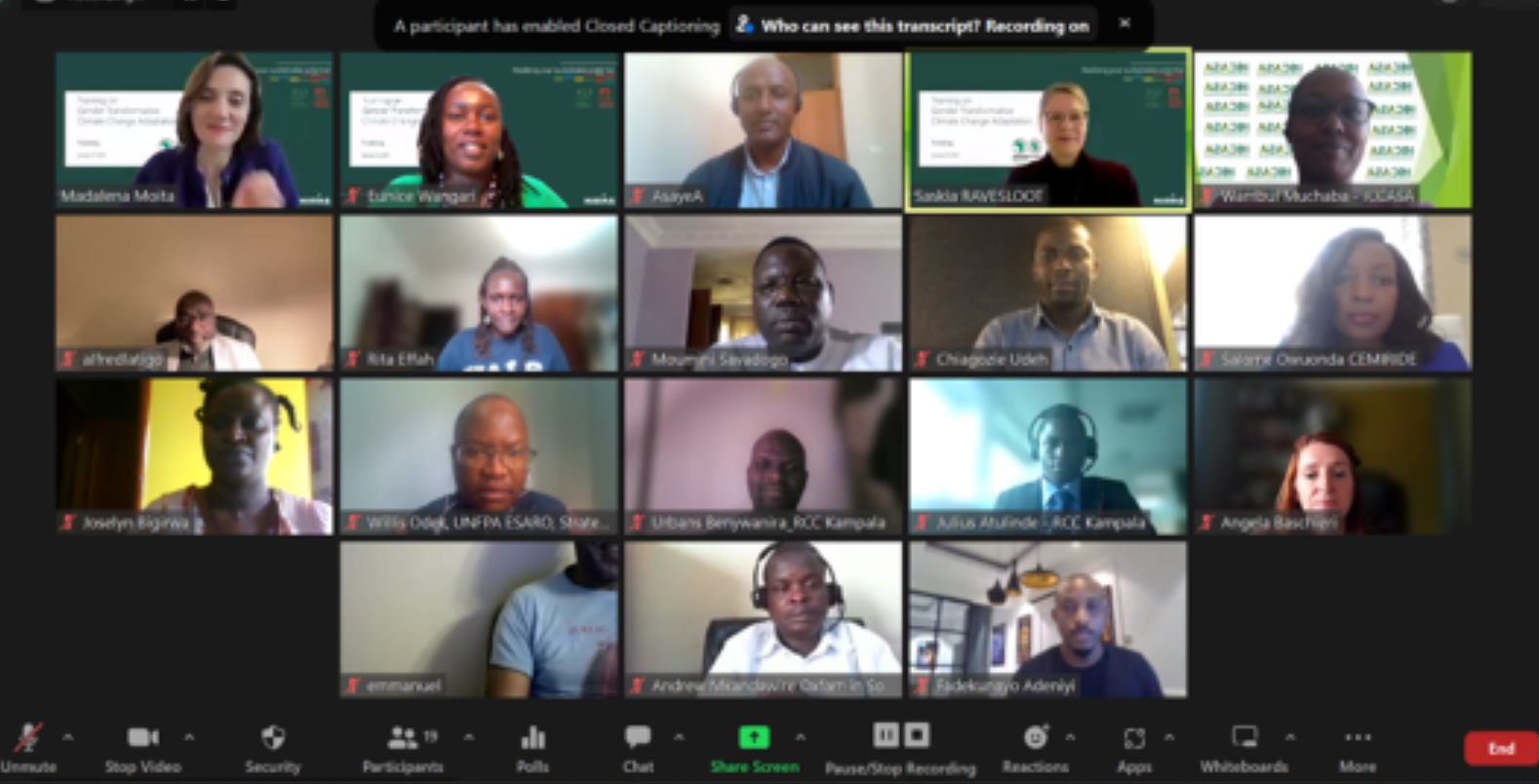
The online training sessions, which began January 9 and ended January 11, had 35 attendees, representing 26 African countries.
The course covered the feminist approach of GTCCA concepts and techniques, understanding the building blocks of Gender Transformative Approaches and types of analysis to tackle root causes of social inequalities. The workshop also covered steps for integrating these approaches from planning to implementation, including understanding how outputs can be capitalized to set priorities for future action and programming. The feminist approach to gender equality and climate resilience projects, also known as GTCCA, aligns with national and international commitments.
Further, participants learned techniques for applying the feminist approach to gender equality and climate resilience projects, also known as GTCCA, in alignment with national and international commitments.
Speaking during the opening ceremony, Rita Effah, Coordinator at the Africa Climate Change Fund Secretariat, reminded everyone about the Fund’s interest in ensuring progress in its funded projects and added, “We are in the process of finalizing letters of agreements with partners in January so that following these trainings, this will set the scene early in the year to implement these projects.”
For his part, Dr. Alfred Latigo urged participants to exploit the training opportunity to equip themselves with knowledge about gender equality, power balance, and climate resilience to implement, measure, and report on the results they planned to achieve in their projects.
Latigo, lead Gender and Climate Change Expert at the ACCF said, “Development practitioners now believe the achievement of climate resilience on the continent is possible only when all people can fully enjoy their rights.”
During the opening session, the trainers, Eunice Wangari, Madalena Moita, and Saskia Ravesloot, senior gender and climate change experts at NIRAS, explained basic concepts, objectives, and methodologies needed when implementing climate-related projects. NIRAS, a multi-disciplinary engineering consultancy, is committed to sustainable progress and service delivery.
Moita said, “state institutions have the duty to mitigate climate change impacts. We need to convince senior management to get involved in gender mainstreaming,” adding that “all individuals are rights holders.”
Further, Ravesloot identified four main areas most affected by climate change –health, weather, food security, and oceans. “We can no longer deny that we are affected by climate change. We have until 2030 to prevent the worst impact of climate change,” Ravesloot stressed.
The GTCCA workshop is an introduction to another online workshop on Results Based Management for designing and implementing a Monitoring and Evaluation system for the ACCF Gender Equality and Climate Resilience projects. The workshop which will also be delivered in English and French begins on Tuesday, 17 January and continues until Thursday, 26 January 2023.
For more information on the workshop, visit https://accf.afdb.org