



Civil Society Organizations- Africa Climate Change Fund- roundtable meeting creates new pathways to address climate resilience
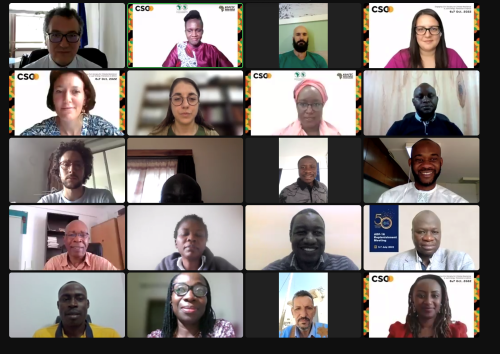
Abidjan, Côte d’Ivoire, October 7, 2022 – The Africa Climate Change Fund (ACCF) organized a virtual roundtable themed “From talk to action: Enhancing African communities resilience to the impacts of climate change in Mozambique, Uganda and Kenya” in collaboration with two NGOs, the AVSI Foundation and the Istituto Cooperazione Economica Internazionale (ICEI), on Day 2 of the AfDB’s 2022 CSO Forum.
This knowledge event was aimed at showcasing the ACCF’s alignment with the Bank’s commitment to strengthening its engagement with CSOs via the results from two CSO-executed projects in Mozambique and Uganda/Kenya. These projects are “Green Energy for Women and Youth Resilience in Uganda and Kenya” being implemented by the AVSI Foundation and CIDR PAMIGA; and “Syntrophic agriculture, a strategy to foster resilience, climate adaptation, and recovery of vulnerable communities in Zambezia Province” implemented by ICEI and Associação Rural de Ajuda Mútua (ORAM).
Dr. AL Hamndou Dorsuma, Acting Director of the Climate Change and Green Growth Department, speaking at the event commended the Bank’s engagement with CSOs indicating that “the Bank is lending credence to the important role CSOs play in development particularly as local actors at the community level, showing that we can do this together.”
The event highlighted the Government of Italy’s contribution to the ACCF. Mr. Alexandro Modiano, Director General for European and International Affairs at the Ministry of Ecological Transition and Italy’s Special Envoy on Climate Change commented: “Through our contribution, the ACCF scaled up to become a multi-donor trust Fund to respond to the growing demand for climate finance across the continent. “The projects in Uganda/Kenya and Mozambique are good examples of the extent to which Civil Society Organizations can lead significant initiatives” in the climate change sector, he added.
During the technical session, project coordinators and partners, Mrs. Maria Ossola and Ms. Giovanna Fotia explained the nature of the projects, how they are being implemented to enhance communities’ resilience and livelihoods, and the challenges and successes they face.
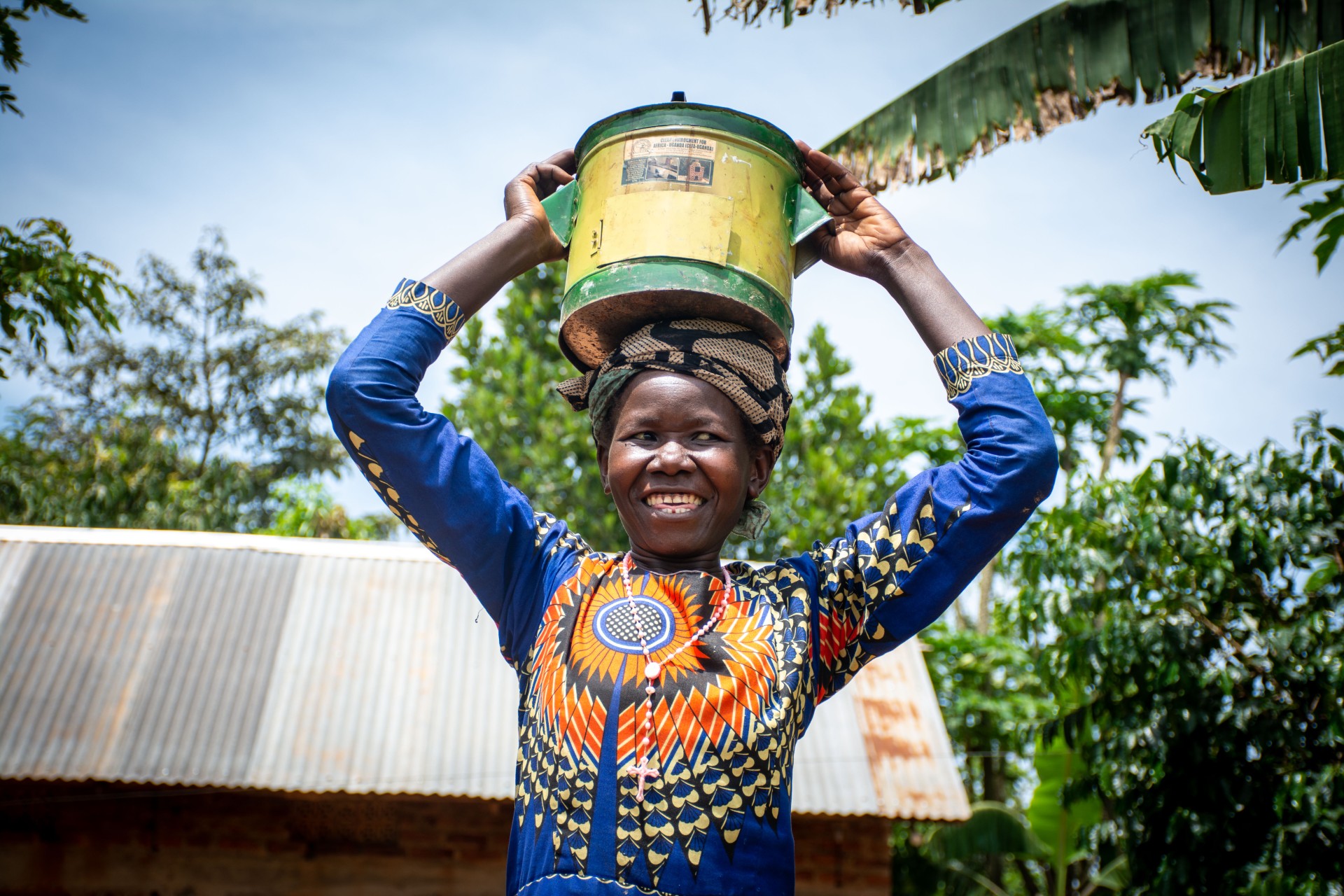
For Maria, the project contributed to improving the lives of “45,000 women and youth end-users of sustainable energy products” and improving access to climate finance for women and youth by providing them with “$85,000 green loans.” These were effective through a strategic approach of capacity building for beneficiaries and the development of partnerships between financial service providers and sustainable energy companies. Maria underlined a key lesson learned indicating that “interventions aiming at creating market linkages and developing market systems are key for the development of the renewable energy sector.”
Carol Makonnen representing Mwangaza Light, a sustainable Energy Company and beneficiary of the project, commented that it has enabled their company to “create market linkage” and “add value” to their work.
Giovanna highlighted that the Successional Agroforestry model implemented by ICEI in Mozambique via the establishment of 10 demo plots and 104 family plots, fish farming, beekeeping, etc. have contributed to increasing (33%) crop diversification, decreasing (21%) slash and burn and decreasing (65%) in post-harvest losses due to weather events.
Giovanna and Felipe Caltabiano, a technical expert with ICEI both stressed the relevance of first prioritizing and understanding the needs of farmers to tailor solutions they can take ownership of to implement and sustain even after the project has ended. For Felipe, he asks this question “what is the one/two aspects that can improve farmers’ productivity” and then focuses on “designing simplified models that improve farmers’ productivity, work quality, and soils” he added.
In her closing remarks, ACCF Coordinator, Ms. Rita Effah, thanked participants for sharing their knowledge and project coordinators and partners for representing “the voice of the beneficiaries” before stressing the importance of difficult questions such as how to reach scale with these projects.
She added that “achieving scale with these projects and others is important to reach more people who are vulnerable to the impacts of climate change and to sustain these efforts so that they have lasting benefits”.
About Africa Climate Change Fund (ACCF)
The ACCF is a multi-donor trust fund established by the African Development Bank in April 2014, with the overall mission to support African countries to build their resilience to the negative impacts of climate change and transition to sustainable low-carbon development. The ACCF is supported by these donors, the Government of Germany via GIZ, the Government of Flanders-Belgium, the Government of Italy, Global Affairs Canada, the Government of Quebec, and the Global Center on Adaptation. Visit the Website HERE
Contact: ACCF Secretariat, AfricaClimateChangeFundACCF@AFDB.ORG