


GENERAL INFORMATION
Grant Approval Date
End (estimated) Date
Project Cost
$576,840
Sector
Climate finance
Executing Agency
Ministry of Territorial Governance, Development and Management of the Territory (MTGDMT)/ National Program for Local Development (PNDL))
Current status
Ongoing
Background
Climate change is a pressing reality affecting communities across the globe, particularly in Africa. The continent faces growing challenges from extreme weather events and rising sea levels that threaten coastal populations.
In Africa, where nearly 70 percent of people rely on rainfed agriculture, poverty and limited adaptive capacity heighten vulnerability. Yet, climate finance flows to the continent remain low and are often directed to small-scale projects rather than large, transformative programs.
Most international climate funds do not grant direct access to local governments, even though their actions are crucial for effective adaptation. Strengthening their technical and financial capacity is therefore essential to help them design and implement bankable projects that meet global standards through national financing channels.
In Senegal, the authorities have made a strategic decision to deepen the decentralization policy, which has included transferring several responsibilities, such as environment and natural resource management, to local governments. In the context of climate change, achieving national and global objectives will not be possible without the active involvement of local authorities.
Objectives
The project overall objective is to remove barriers hindering local governments to access climate finance, in particular, to global funds.
Main Components/Outputs
The project is structured around three main components designed to strengthen the capacity of local governments to access and manage climate finance effectively.
- Municipalities are equipped with the mechanisms and resources needed to overcome barriers to accessing climate finance.
- Local governments are informed and empowered to design and formulate projects eligible for climate funds.
- Knowledge products capturing the project’s experiences are developed, disseminated, and widely shared.
Key Achievements or Progress
1. Institutional strengthening
- A Support Unit was established within the PNDL to coordinate and sustain local governments’ capacity-building processes.
- A Climate Finance Division was created to focus on climate-related funding, supported by dedicated staff.
- The Help Desk digital platform, developed by CSE, was transferred to the PNDL and now serves as a knowledge-sharing tool accessible to local actors nationwide.
2. Access to climate finance
- A study proposed the creation of a climate sub-window within the Local Authorities Equipment Fund (FECT).
- Guides and tools for preparing projects for global climate funds (GEF, GCF, Adaptation Fund) were developed.
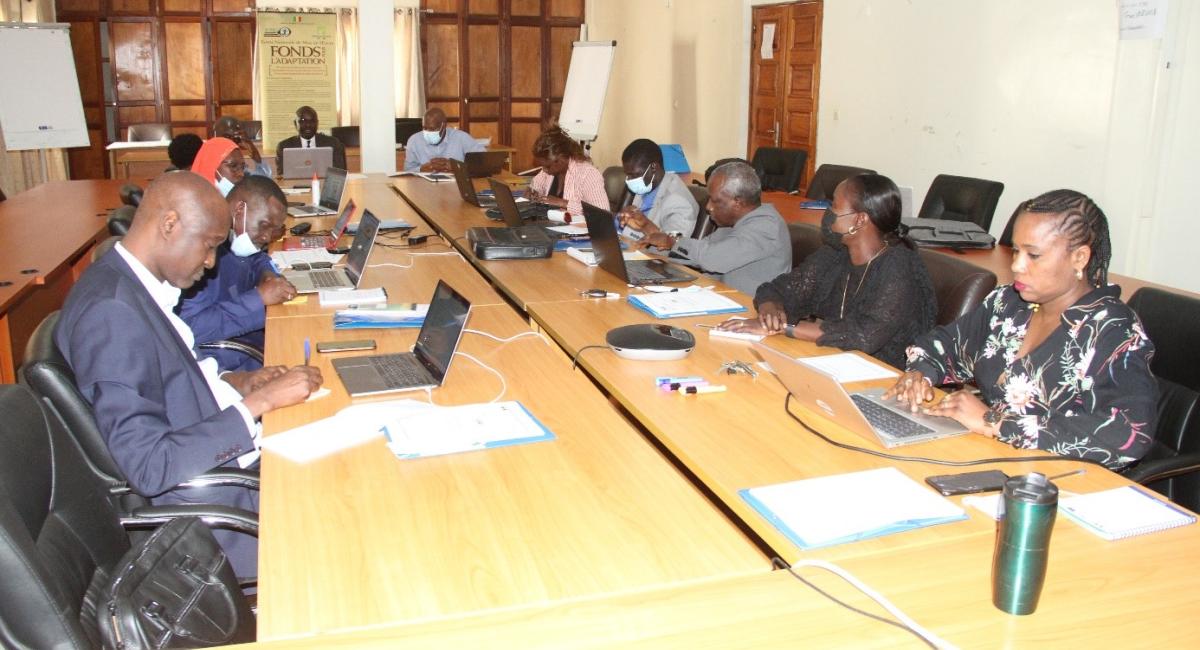
- Seventy-four participants, including sixteen women, were trained on project formulation and management.
- Two concept notes were prepared for submission to international funds, one for the Ferlo communes and one for Fatick.
3. Knowledge capitalization and dissemination
- The project’s experiences were documented to support replication and sustainability.
- A replication plan and related tools were developed.
- Two documentary films, in French and English, were produced to showcase results and promote wider dissemination.
More images about the project
More videos about the project
More documents about the project