


GENERAL INFORMATION
Grant Approval Date
End (estimated) Date
Project Cost
$277,300
Sector
Executing Agency
National Climate Change Programme - PNCC
Current status
Ongoing
Background
Côte d'Ivoire has committed in its Nationally Determined Contributions to reduce its greenhouse gas emissions by 30.40% in accordance with the Paris Climate Agreement. The waste sector, which accounts for 3.53% of national emissions, has been identified as one of the sectors with the highest greenhouse gas (GHG) emissions, behind the energy, agriculture, and forestry sectors.
Medical and pharmaceutical waste accounts for a large proportion of the waste landfilled each year. According to estimates by the National Health Waste Management Plan (PNGDS), the Ivorian health system, all sectors combined, produces approximately 25.55 tonnes per day, or 9,325.09 tonnes per year.
The waste produced by activities in the health sector has a significant impact on the hygiene and quality of life of the population.
Despite various interventions to improve healthcare waste management, the results on the ground are unsatisfactory. The current management system remains inadequate. Waste sorting at source is not systematic, most collection and transport equipment is inappropriate, and environmentally sound disposal methods remain insufficient and emit greenhouse gases (GHGs). In addition, medical waste is not taken into account in the NDCs (absence of an emissions reduction policy in the health sector).
It is in this context that the African Development Bank Group (AfDB) is supporting the Government of the Republic of Côte d'Ivoire in its sustainable development efforts through a grant from the African Climate Change Fund (ACCF) to finance the project “Preparing Côte d'Ivoire for the Decarbonisation of Solid, Medical and Pharmaceutical Waste Management (DMP) to Achieve GHG Emission Mitigation Targets in Accordance with NDCs and the 2050 Target of the Paris Agreement.”
Objectives
Green the national strategy for solid waste and medical and pharmaceutical waste management by 2050 and provide medium-term financial and technical support to the health sector to integrate the mitigation of greenhouse gases (GHGs) from healthcare into future NDCs.
Main Components/Outputs
1. Develop a long-term strategy (Vision 2050) for solid waste management, incorporating medical and pharmaceutical waste (MPW).
2. Develop an MRV system for solid waste management, with a pilot phase for the MPW sector.
3. Mobilise resources through a learning approach.
4. Project management, monitoring and evaluation, and learning plan.
Key Achievements or Progress
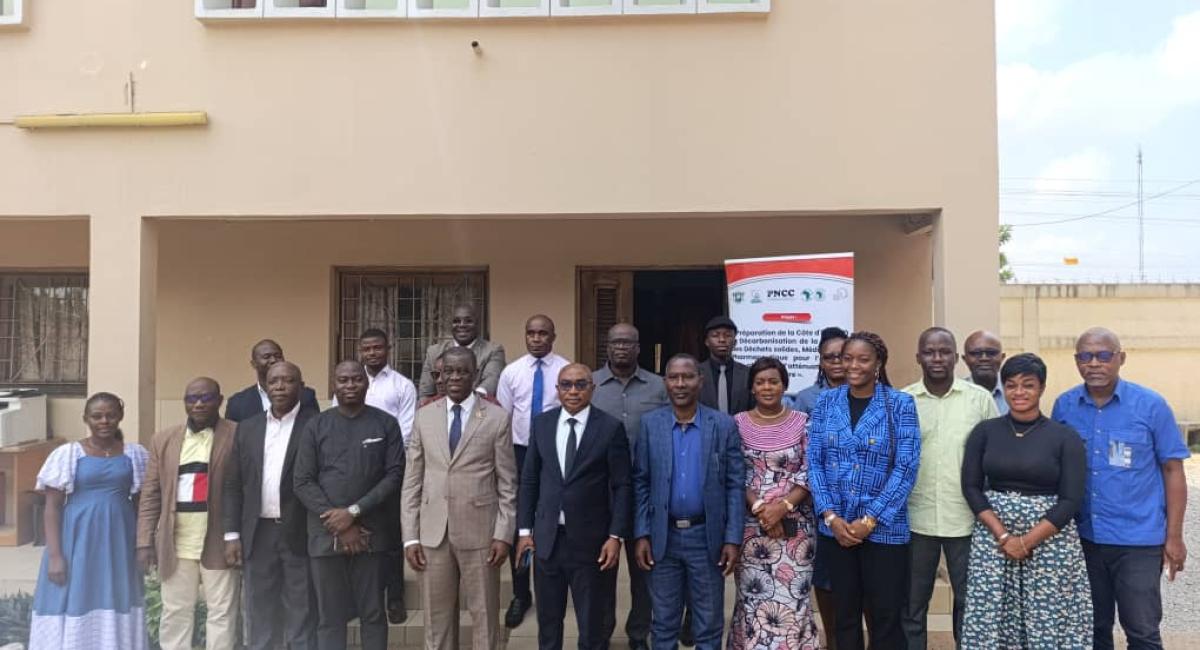
Participation of key stakeholders in the health sector in the implementation of the project.
Finalization of the study on greening solid waste and medical waste management strategies.
Integration of the project into the NDC 3.0 review team under the Waste theme.
More images about the project
More videos about the project
More documents about the project