



GENERAL INFORMATION
Grant Approval Date
End (estimated) Date
Project Cost
$1,000,000
Sector
Executing Agency
African Development Bank
Current status
Ongoing
Background
Africa faces the combined challenges of high youth unemployment and increasing climate vulnerability. The continent’s youth population is projected to exceed 830 million by 2050, yet job creation continues to lag behind this growth. Unemployment remains high, while climate change is disrupting key sectors such as agriculture, water, and infrastructure through droughts, floods, and rising temperatures. These factors are eroding livelihoods and increasing economic pressure, particularly in communities dependent on natural resources. Addressing this challenge requires equipping young people with the skills, finance, and tools to participate in emerging green and circular economy sectors. Building a climate-resilient economy is therefore central to unlocking sustainable employment and reversing the structural drivers of economic stagnation.
The YouthADAPT Program directly responds to this challenge by supporting youth- and women-led enterprises developing climate adaptation and resilience solutions. Through a blended model that combines business development support, technical assistance, and catalytic finance, the program enables entrepreneurs to commercialize climate-smart innovations, expand market access, and create jobs. YouthADAPT serves as a bridge between early-stage innovation and private investment, helping to build a pipeline of scalable, investment-ready enterprises that strengthen climate resilience across key sectors such as agriculture, water, and energy. As one of the four pillars of the Africa Adaptation Acceleration Program (AAAP), Africa’s flagship response to the climate crisis, YouthADAPT plays a critical role in operationalizing the continent’s adaptation agenda through entrepreneurship and inclusive growth.
The program aligns with the Sustainable Development Goals, the African Union’s Agenda 2063, and the African Development Bank’s strategic priorities, including the Ten-Year Strategy, Climate Change and Green Growth Action Plan, and Jobs for Youth in Africa Strategy.
Objectives
- Strengthen high-impact enterprises by partnering with climate innovation centers to provide business development support and seed grants to growth-oriented startups, at least half of which are women-led. This support helps scale operations, improve productivity, create jobs, and build community-level climate resilience.
- Improve access to finance by conducting and enabling environment and market readiness assessments in selected countries to design a green financing facility for youth-led MSMEs.
- Operationalize a Financing Facility that has evolved, through deeper engagement with climate entrepreneurship ecosystem partners, into the InvestmentHub. This platform provides tailored transaction and advisory support to at least 20 growth-stage enterprises, with 50% expected to be women-owned. A total of USD 1 million has been secured to operationalize the Investment Hub in the next phase of the program. Each enterprise will receive up to USD 50,000 worth of specialized services, including business and financial modeling, investor readiness, legal and ESG compliance, marketing, and transaction management, to help them secure investment and scale sustainably.
- Mainstream gender-transformative action within the Bank’s broader investments by developing a gender framework for the AAAP.
Main Components/Outputs
Pillar 1: Enabling Policy Environment
This pillar focuses on strengthening the policy and regulatory framework for implementing the USD 500 million green credit facility for MSMEs in eight African countries. ACCF funding of USD 25,000 will be used to integrate gender considerations into the country-specific readiness assessments already underway, ensuring that legal, policy, and regulatory conditions support equitable access to the facility. These gender-responsive assessments will also inform targeted policy dialogue and the selection of two priority countries that will receive direct regulatory and policy support under complementary YEI MDTF funding. The results will enhance countries’ preparedness to absorb and effectively utilize the credit facility, while setting the foundation for scaling regulatory reforms to the remaining six countries as additional funding becomes available.
Output: Enabling environment study
Pillar 2: Scaling Up Gender-Responsive Youth Innovations
This pillar expands the YouthAdapt Solutions Challenge to support women-led and owned enterprises developing climate adaptation innovations, particularly in Fourth Industrial Revolution (4IR) technologies. Building on the first cycle, which supported ten youth-led enterprises, the second cycle will target ten additional women-led businesses, each receiving up to USD 100,000 (USD 80,000 from ACCF and USD 20,000 from GCA). The program will recruit an Enterprise Support Organisation (ESO) to manage implementation, including a bootcamp for 20 shortlisted firms, selection of ten winners, disbursement of grants, and a 12-month accelerator program focused on business development, climate resilience, and market readiness. The ESO will also provide mentorship, monitor implementation, and ensure that each enterprise creates at least ten jobs while scaling adaptation solutions in key sectors such as agriculture, renewable energy, water, waste management, and resilient infrastructure.
Output: Seed grants, training program, mentorship program
Pillar 3: Unlocking Access to Finance
This pillar has evolved into the InvestmentHub, a USD 1 million financing and advisory platform designed to help climate ventures raise capital and scale their operations. The InvestmentHub provides professional transaction and advisory support to growth-stage enterprises, with half expected to be women-owned. Each enterprise receives tailored assistance worth up to USD 50,000, including business and financial modelling, investor readiness, legal and ESG compliance, marketing, and transaction management services. The intervention aims to help participating enterprises collectively raise up to USD 21 million in private non-grant investment. By bridging the gap between early-stage innovation and commercial finance, the InvestmentHub strengthens the pipeline of investment-ready youth- and women-led climate businesses and deepens private-sector participation in Africa’s adaptation economy.
Output: Operational document of the financing facility, funding proposal for the facility
Africa Adaptation Acceleration Program (AAAP) Gender Policy
This intervention supports the broader AAAP by developing a gender policy and action plan for the program and by integrating gender dimensions into its theory of change and results framework.
Output: Gender policy, gender strategy and gender action plan for the AAAP.
Key Achievements or Progress
The YouthADAPT Accelerator Program is delivering strong earlyresults and tangible impact. Supported enterprises achieved an average of 72.36 percent revenue growth, 24.95 percent profit margin growth, and 128.54 percent increase in production capacity. The program created 185 jobs (49 direct and 136 indirect) and trained 1,726 smallholder farmers in climate-smart agricultural practices, directly strengthening local economies and resilience.
Enhanced Access to Climate Finance and Technology for Women Entrepreneurs
By the end of the implementation period, 7 out of 8 participating enterprises—representing 87.5 percent—had received business development grants of USD 31,250 each. These catalytic grants enabled high-potential startups to transition from prototype to scale, de-risking climate-tech business models in emerging markets. The funding translated into strategic asset acquisitions and technology upgrades that are redefining how women-led enterprises drive climate adaptation across Africa.
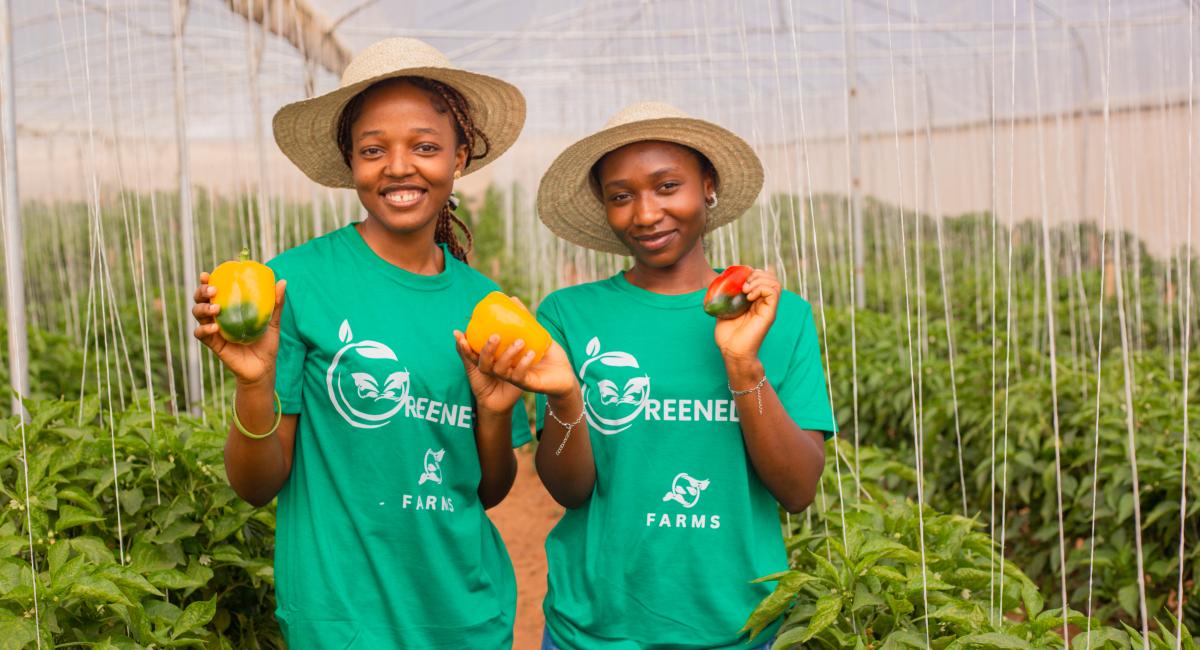
ETS Grecom invested in expanding its rural honey value chain infrastructure and securing proprietary intellectual property for patentable innovations, advancing biodiversity protection and early warning systems for beekeepers. ETS Chemchem Agro deployed IoT-enabled hive monitoring systems and upgraded its Api Connect platform, reducing pesticide-related losses and improving productivity for smallholder farmers. Cahpi Core Tech implemented advanced automation and solar-powered systems that enhanced efficiency while cutting emissions and drought risk. Majik Water piloted a decentralized solar-powered water kiosk model that expanded production capacity from 500 to 1,500 liters per day, improving household water security. Arinifu Technologies upgraded its Kuku Smart precision-agriculture platform and launched solar-powered brooders and heat mitigation systems, reducing poultry mortality under extreme temperatures. Onion Doctor advanced an AI-based pest diagnostics engine that strengthened farmers’ pest management decisions, while Green Eden enhanced its AI- and IoT-enabled greenhouses to maintain crop yields during floods and droughts.
Together, these results show that ACCF support is not only financing small enterprises but also enabling a new generation of founders to build scalable, technology-driven solutions that reinforce climate resilience at the community and market levels.
Institutional Strengthening and Gender Integration
YouthADAPT also achieved key institutional milestones. With ACCF support, gender-responsive operational documents were developed for a financing facility targeting youth-led enterprises. These documents introduced gender guidelines, power analysis, and results-tracking mechanisms to ensure fair access to finance for women and youth entrepreneurs. Building on these foundations, the financing facility has evolved into the InvestmentHub, a USD 1 million component under YouthADAPT Cohort 4. The InvestmentHub provides professional transaction and advisory support—valued at up to USD 50,000 per enterprise—to at least 20 growth-stage, youth- and women-led climate ventures actively raising capital. The goal is to help these businesses secure over USD 21 million in external investment, accelerating their growth and expanding climate impact. ACCF’s early support has positioned the InvestmentHub as a permanent feature of YouthADAPT, institutionalizing a scalable mechanism for youth and women entrepreneurs to access investment-readiness support.
Advancing Gender-Transformative Adaptation through the AAAP
Cohort 3 also advanced the Africa Adaptation Acceleration Program’s (AAAP) gender mainstreaming agenda. The AAAP Gender Framework was developed, comprising a Gender-Based Theory of Change, Gender Policy and Strategy, and Gender Action Plan. These tools establish a unified approach to integrating gender across AAAP operations and will be operationalized through staff training and systematic application across all projects. This work ensures that YouthADAPT not only delivers enterprise-level impact but also contributes to a more inclusive, gender-transformative climate adaptation agenda for Africa.
More images about the project
More videos about the project
More documents about the project