

GENERAL INFORMATION
Grant Approval Date
End (estimated) Date
Project Cost
$998,192
Sector
Executing Agency
UNFPA ESARO
Current status
Ongoing
Background
Climate change worsens existing health issues for women, adolescent girls, and young people, including limited access to clean water, sanitation, food, healthcare, and education. It directly impacts sexual and reproductive health and rights (SRHR), gender equality, and sustainable development, as outlined in the ICPD Programme of Action. Failure to uphold SRHR hinders women and girls' involvement in climate action and policy, limiting their education, livelihoods, and decision-making. Girls forced into early marriage may not receive critical climate information. Realizing SRHR, especially for marginalized groups, empowers individuals to engage in climate action and ensures their needs are met.
SRHR is crucial for gender equality and gender-responsive climate action. Bodily autonomy is essential for adapting to a changing environment, especially with diminishing resources and unmet family planning needs. The link between SRHR and building healthier, more resilient populations has been undervalued in climate discussions. Extreme weather events disrupt healthcare and supply chains, therefore limiting SRH service access. Economic shocks from climate change can also make these services unaffordable. Disruptions lead to increased Sexually Transmissible Infections (STIs), unwanted pregnancies, maternal complications, and deaths. Closure of schools and educational institutions, coupled with economic hardships, exposes families to unhealthy coping mechanisms such as child labor and forced child marriage. Climate change can also divert national funding from health and SRHR to climate responses.
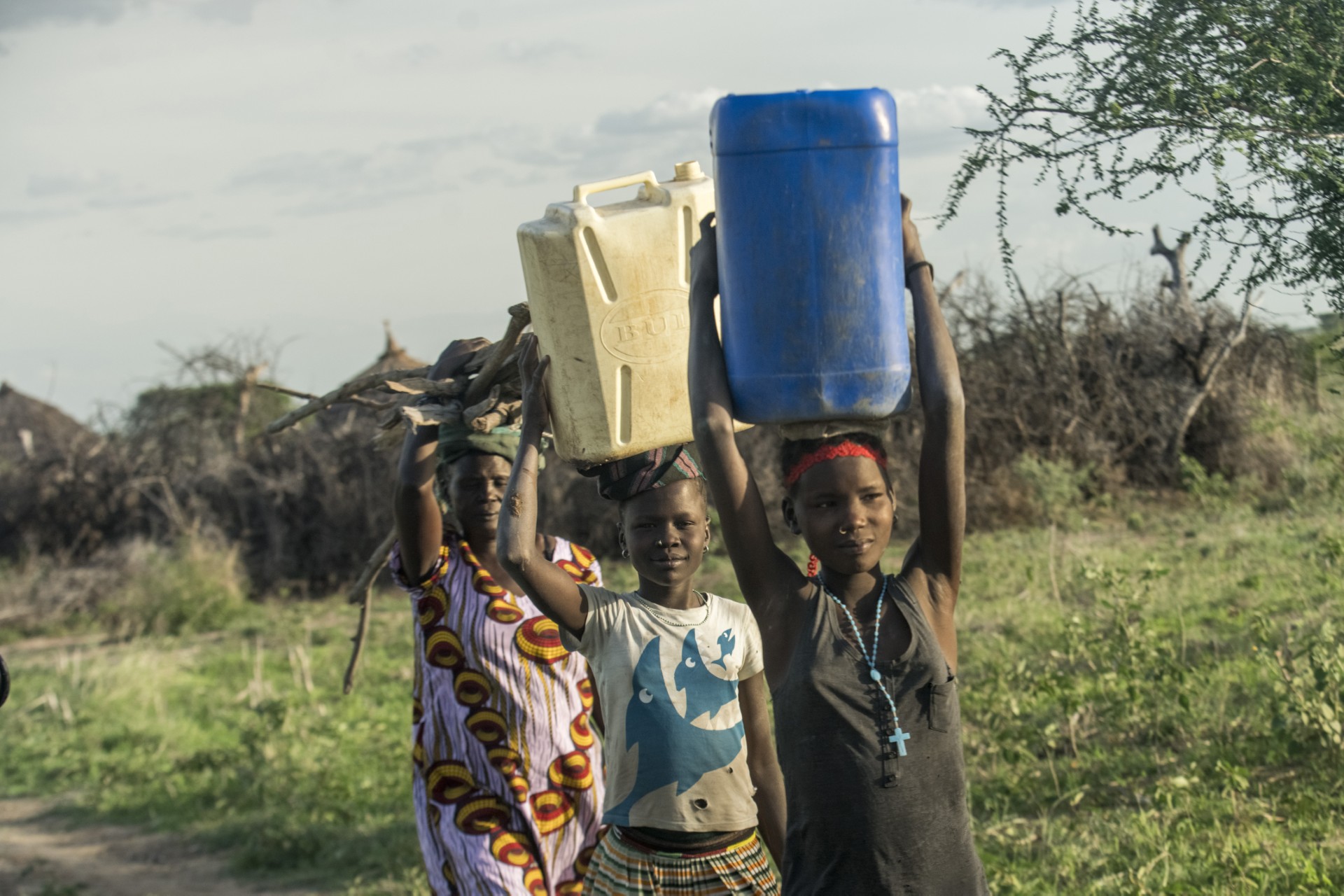
Climate change disproportionately affects populations reliant on natural resources and those least able to respond to hazards. Women and girls, particularly those in poverty, face higher risks. Water and food scarcity occasioned by climate shocks exacerbate women’s and girls’ domestic responsibility while simultaneously exposing them to further bodily harm. Their unequal participation in decision-making and labor markets, often due to discriminatory social norms, prevents them from fully contributing to climate planning. Additionally, unequal representation impedes the flow of climate funding towards the needs of women and girls. In Africa, these disparities are exacerbated by climate change’s impact on women’s livelihoods. Policies and programs must consider these gender-specific effects.
Climate change and related disasters are linked to increased vulnerability to gender-based violence (GBV), including sexual violence, transactional sex, and sex trafficking, which in turn raise STI and unintended pregnancy risks. This vulnerability is heightened for socially or geographically isolated women and girls, migrants, refugees, LGBTQIA+ individuals, and those with disabilities or living in poverty.
The 2022 review of the Gender Action Plan presents an opportunity to strengthen its framework to better address the gender-transformative needs of African countries and communities on the frontlines of climate impacts. Training government officials and negotiators to articulate appropriate gender responses will provide African countries with crucial information before the review. At COP 25, countries agreed to an enhanced Lima Work Programme on Gender for five years to advance gender equality in international climate processes. While some African countries have developed Gender Action Plans to integrate, report, and monitor gender-responsive climate action, many lack the capacity. This project will support training and capacity building for stakeholders to drive gender-transformative actions in target countries.
The United Nations Population Fund (UNFPA) champions reproductive health and rights, expanding opportunities for women and young people to lead healthy, productive lives. As the lead UN agency for ensuring every pregnancy is wanted, every childbirth is safe, and every young person’s potential is fulfilled, UNFPA works to enhance the adaptive capacity and climate resilience of key populations most affected by climate change.
Objectives
Project Objectives & Rationale for ACCF Intervention in terms of Gender-Transformative Climate Resilience. This program of work aims, through a multi-pronged, innovative, participatory, and phased approach, to strengthen climate resilience through:
- The empowerment of young people, women and other vulnerable groups with the delivery of integrated CSE and Climate Change education, and the scale-up of youth and women-led climate and SRHR-related initiatives through innovation incubator opportunities;
- The integration of SRHR and gender-transformative approaches into participatory and rights-based vulnerability assessments of climate change, with the involvement of national, regional and various stakeholders in selected countries;
- The enhancement of government officials’ and other key stakeholders’ capacities on the linkages between SRHR, gender and climate change, for the development of comprehensive and gender-transformative national climate policies, including NDCs and NAPs—stakeholders include women, youth, and other groups most vulnerable to climate change;
- The implementation of human-centered design approaches to facilitate the engagement of women, youth, and other groups most vulnerable to climate change to identify solutions to the impacts of climate change that affect them.
Main Components/Outputs
Output 1111: Consultations conducted on gender-transformative national climate adaptation action with youth, women, and vulnerable groups in at least four countries.
Output 1121: Female-led climate and SRHR-related innovative solutions on SRHR, gender, and climate change are developed through the Climate Hacklab.
Output 1122: Strengthened capacity of countries to develop participatory and rights-based vulnerability assessment tools that integrate SRHR, gender, and climate change.
Output 1211: Strengthened capacity of countries to conduct quality climate change vulnerability assessments integrated with SRHR and gender.
Output 1221: Strengthened capacity for mainstreaming gender-transformative climate actions into NDC and NAP processes.
Output 1222: National and regional institutions, including those related to women and youth, are capacitated to effectively raise awareness of the impact of climate change on SRHR, gender, and youth.
Output 1311: Empowered women, young people, and the most vulnerable groups effectively participate in the validation of NDC and NAP processes.
Output 1321: Strengthened capacity of government institutions and partners, especially women, girls, and marginalized groups, in utilizing human-centered design approaches to link climate change vulnerability to SRHR and gender.
Key Achievements or Progress
Over 60 youth advocates and activists and youth -serving government representatives, civil society, academia, youth leaders, and UNFPA in two countries capacitated as trainers through the train-the-trainers workshop to roll out modules within existing CSE/SRHR/youth programs and platforms, establishing clear next steps for implementation, documentation, and future monitoring and evaluation, with a focus on reaching marginalized young people (e.g., those with disabilities, living with HIV) through both in-school and out-of-school modalities.
Successfully launched the "Let's Hack Climate Change" Hacklab, a series of climate innovation 'Hackathons' designed to empower young people, especially girls and young women, to develop innovative ideas into commercially viable solutions that promote SRHR, adaptive capacity, and resilience among those most vulnerable to climate change, reaching over 500,000 people with 117 shortlisted innovators, 8 country-level winners (six young women and two young men) each awarded $5,000 in seed funding, along with comprehensive enterprise coaching and mentoring; and 2 winners of the regional ‘Pitch session’ securing an additional $10,000 in scale-up support for their climate innovation solutions.
Two knowledge products were published as part of the dissemination of harmonised tools: Harmonization of vulnerability assessment tools for SRHR, HIV and GBV in humanitarian settings and Handbook for Conducting Multi-stakeholder Vulnerability Assessments for SRHR, HIV, and GBV in Humanitarian Settings
Over 150 government officials and other national actors in 3 countries (Kenya, Madagascar, Mozambique and Zimbabwe) received enhanced capacity building in participatory and rights-based national assessments.
One participatory, rights-based, and SRHR/gender-integrated Climate Vulnerability Assessment (CVA) completed in South Sudan showing 50 percent increase in GBV cases in climate-affected areas with two CVAs ongoing in Kenya and Madagascar.
Four successful workshops were jointly conducted with key government Ministries across Kenya, Mozambique, Zimbabwe, and Madagascar, engaging a total of 172 participants from various sectors to build capacity of key national actors on the intersection of SRHR, GBV and gender with climate, and their integration into climate action and national adaptation plans.
A multi-sectoral training manual on the links between SRHR, gender, and climate change for national stakeholders was developed and published.
A commentary paper was published in the Sexual and Reproductive Health Matters Taylor and Francis Journal and National Library of Medicine as part of the communication and knowledge sharing activities of the Resilient Futures.
The “Incredible Stories” Media Campaign, including videos, a documentary, and a digital booklet showcasing HackLab innovators (including Climate Hacklabs) was launched.
More images about the project
More videos about the project
More documents about the project