
GENERAL INFORMATION
Grant Approval Date
End (estimated) Date
Project Cost
$635,960
Sector
Gender and Climate Resilence
Executing Agency
Inclusive Climate Change Adaptation for a Sustainable Africa / Center for Minority Rights Development
Current status
Ongoing
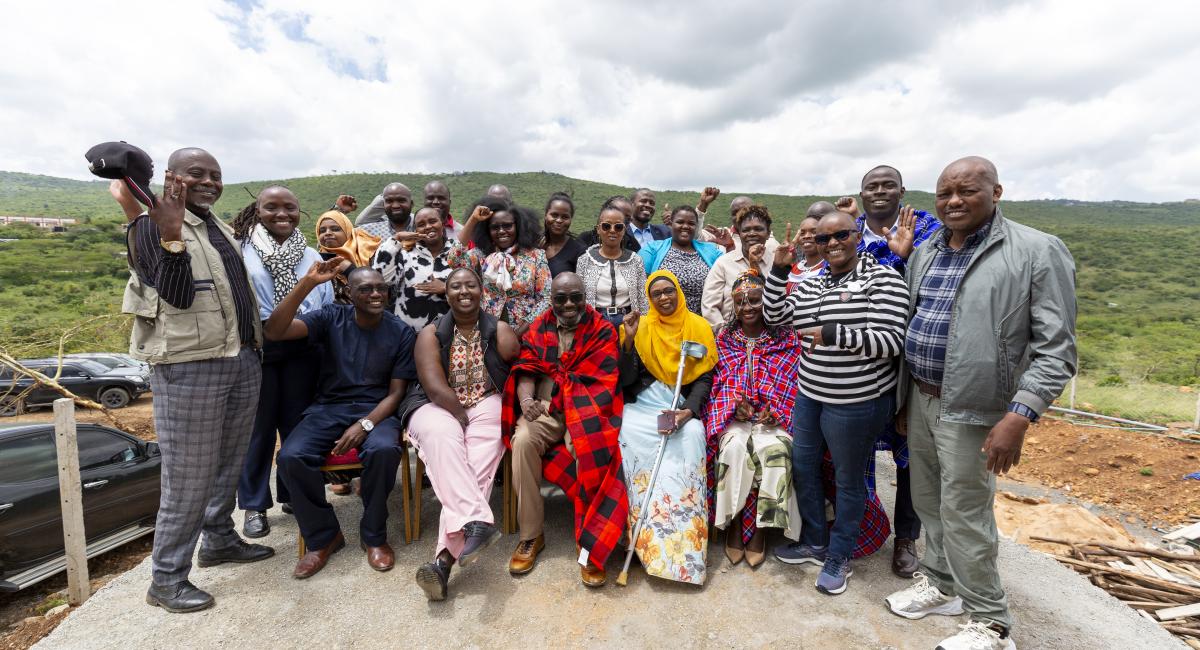
Background
Studies have shown that attitudes and structural barriers due to different impairments make WWD more vulnerable to climate change, violence, and discrimination (Astbury and Walki, 2013). This is due to the myriad challenges faced by WWD such as lack of access to education, myths and cultural practices, high poverty levels, lack of power and finances, and poor access to information, among others, that are discriminatory and harmful to WWD. Widespread discrimination, rooted in pervasive stereotypes and attitudes, heavily contributes to the exclusion of WWD from socio-political and economic participation. This project will provide a regional gendered diagnostic analysis of vulnerability and adaptive capacity to climate change in Eastern Africa, and provide Women with Disability (WWD), including those from indigenous communities, an opportunity to participate in climate change negotiations and policy making. It is evident that WWDs are confronted with issues of everyday survival. In the absence of supportive policies, infrastructure, and services, WWD face quadruple disadvantages of location, gender, disability, and age. WWD often work harder, in poorer conditions, and for lower wages across Eastern Africa, with negative wellbeing outcomes seen particularly in the neglect of their health. In a sense, WWD don’t have voice and power, and they are more likely to have difficulties during evacuations or migrations. There is very little information on impacts of climate change on WWD and how their voices and participation can be integrated into climate change policies, negotiations, and discourses at national and global platforms.
The project will work towards advancing WWD’s participation in climate change actions, supporting women and girls in the realization of their full human rights, and reducing gender inequalities in access to and control over the resources and benefits of the actions. It goes beyond the women-men binary and looks at the disability intersection and how this affects the roles, needs, and priority of the different gender groups in climate change actions. It intends to challenge the norm that encourages exclusion based on gender and disability by building the capacity of WWDs, sensitizing the WWDs and duty bearers on the importance of involving WWDs as agents of change in climate action, and encouraging adoption of gender responsive and inclusive climate change actions at all levels. The project will target WWDs as right holders, and women who are not living with disability, as well as men who are duty bearers in climate change space. This will be intended to change the perception on inclusion of WWDs in climate change action and promote accountability and legality of the duty-bearers’ climate actions. A Gender Action Plan will guide the project in ensuring that: a) the capacity of WWDs in climate change actions is enhanced; b) climate change activities take into consideration the gender specific needs and interests of the WWDs; and c) all stages of climate change actions are gender transformative with gender transformative results. The project intends to enhance community resilience through empowering the WWDs to actively and effectively participate in climate change action, hence reduce carbon.
Objectives
The project aims to enhance technical skills and improve the leadership of women with disabilities in climate change policymaking and negotiations at national and global levels.
Main Components/Outputs
The project is implemented to pursue the following results:
- Enhancing understanding of gender inequality and power dynamics hindering WWDs' engagement in climate policy
- Increasing capacity of WWDs to effectively participate in and influence climate policy negotiations at all levels
- Improving WWD attendance and contributions in at least five climate decision-making forums
- Strengthening regional collaboration, integrating WWD perspectives into climate governance and advocacy frameworks
- Increasing visibility, recognition, and public awareness of WWD leadership and inclusion in climate action and finance
- Enhancing awareness and engagement on disability-inclusive climate action
- Adoption of the WWD engagement framework by at least three national and regional climate governance bodies
Key Achievements or Progress
The project is currently ongoing and while more results are expected, the following interim achievements have been recorded:
- The project conducted a contextual analysis of the socio-economic, cultural, and institutional landscape, highlighting gaps, challenges, and opportunities shaping their inclusion in climate governance. This analysis serves as a critical benchmark for measuring project progress and impact. A key achievement is the Gender Power Analysis (GPA), which examined the root causes of WWDs’ and IPs’ limited access to and control over resources. The GPA provided deeper insights into gender dynamics, vulnerabilities, and institutional barriers, forming the basis for the Gender Action Plan (GAP).
- Three WWDs and their aides sponsored to attend COP29 in Baku, Azerbaijan, enabling their participation in the global climate discourse. They engaged in the Disability Caucus and UNFCCC plenaries, where they influenced discussions on climate finance, gender, and loss and damage.
- Establishment of the African Alliance for Women with Disabilities in Climate Action (AWAC), launched at a regional event attended by representatives from five East African countries, including government officials, grassroots organizations, climate experts and private sector stakeholders
- 45 journalists and editors trained on gender-transformative and disability-inclusive reporting, strengthening collaboration with media houses to integrate inclusive narratives
- Diverse communication materials developed and disseminated to amplify the voices of Women with Disabilities (WWDs) in climate action. Six podcasts and were shared via Spotify, YouTube, and the project’s website.
- Two women supported to attend the UNFCCC The 62nd sessions of the UNFCCC Subsidiary Body for Implementation and Subsidiary Body for Scientific and Technological Advice
More images about the project
More videos about the project
More documents about the project