





GENERAL INFORMATION
Grant Approval Date
End (estimated) Date
Project Cost
$ 1,000,000
Sector
Climate finance
Executing Agency
African Development Bank
Current status
Ongoing
Background
Despite making a marginal contribution to greenhouse gas (GHG) emissions, African economies face a much larger exposure to climate change risk with both physical and transition risks at play and the prospect of significant knock-on effects on credit markets and loan portfolios. According to a recent report from Moody’s1, African banks are vulnerable to the increasing frequency and severity of climate change shocks unless lenders take action to manage these risks. The report expects that environmental factors will lead to a deterioration of the banks’ credit quality and profitability in the long term if they do not take measures to prudently manage climate-related and environmental risks.
As such, there is an urgent need for as African financial sector regulators, supervisors, underwriters, and central banks to support and guide the financial system toward greater resilience against climate risks. On a positive side, there is global shift toward sustainability finance such as the Glasgow Financial Alliance for Net-Zero (GFANZ), a global coalition of leading financial institutions committed to accelerating the decarbonization of the global economy with about 130 trillion in assets under management. According to the GFANZ, the financial sector, “will need to adjust their business models, develop credible plans for the transition to a low-carbon, climate resilient future and then implement those plans.
Of the 280 Banks that are signatories to the Principles of Responsible Banking of the UNEP Financial Initiative (UNEP FI) only 21 are from Africa; Over 200 insurance companies have signed the Principles of Sustainable Insurance but only 8 are from Africa; similarly, for the financial regulators, of the 114 members of the Network of Greening the Financial System (NGFS), only 8 are from Africa.
It is for this reason, that the Bank established the African Financial Alliance on Climate Change (AFAC) in 2018 as platform to engage Africa’s financial sector with the goal of de-risking and direct capital flows towards low-carbon and climate-resilient investments on the continent.
Objectives
The project aims to create an enabling environment for the private sector to channel climate finance flows towards Africa’s green investments. The project will strengthen the capacity of the local/domestic financial sector to identify and finance green projects; develop tools and methodologies that enhance the credibility of projects tagged as green investments; and enhance awareness to create a critical mass of the financial sector involved in sustainable finance through a strengthened African Financial Alliance on Climate Change (AFAC) by developing a fit-for-purpose strategy for it.
Main Components/Outputs
The project articulates around three major outcomes:
- Industry-specific standards for climate financial risk management developed
- Increased capacity of Africa’s financial sector to green their portfolios
- Strengthened role the African Financial Alliance on Climate Change (AFAC)
Key Achievements or Progress
The project is currently ongoing and expected to close by mid-2026. While more results will be achieved at completion, the following interim results have been achieved:
827 members of the African Financial Alliance on Climate Change representing the African financial institutions, including banks, insurance, capital markets, and financial regulators trained on climate change within the financial industry in Africa.
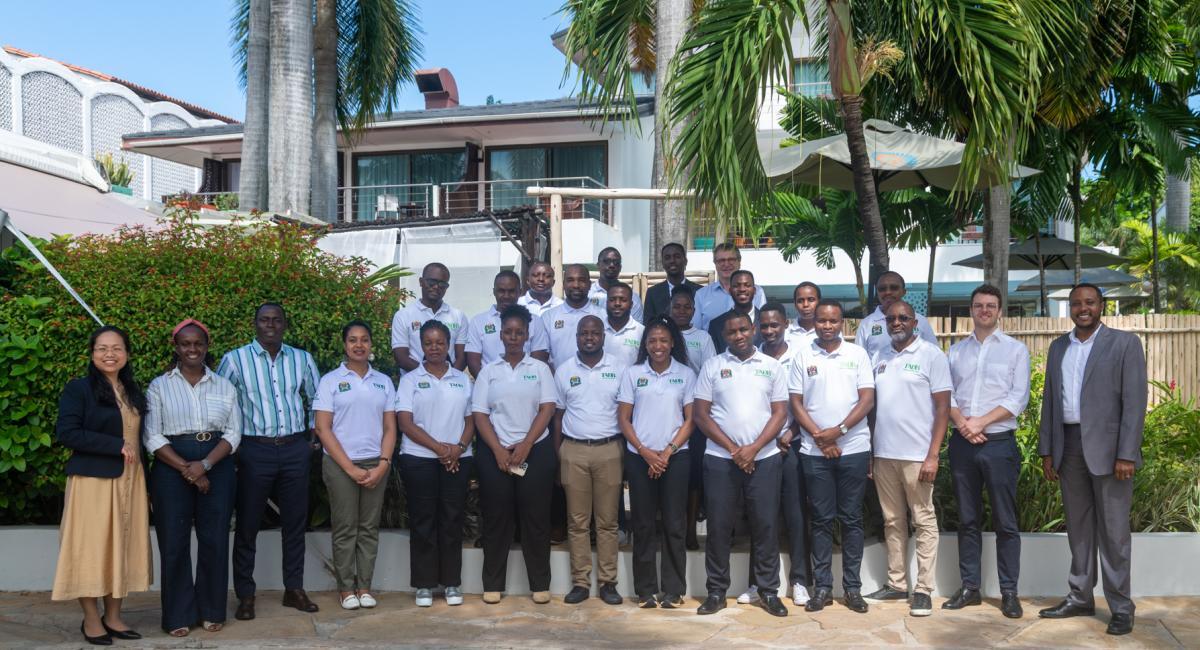
Over 100 professionals from the African Banking sector from over 50 African countries trained on climate-related financial risks within the Banking sector.
Developed and launched the AFAC Strategy Program
Ongoing development of an African ESG Taxonomy specifically for the financial sector.
Technical support to the implementation of International Sustainability Standards Board (ISSB) for South African Companies and Intellectual Property Commission
Technical assistance to the Tanzania Agricultural Development Bank through a climate risk assessment of the TADB. Subsequent efforts will include creation of innovative climate due diligence tools, business development resources, and conducting climate stress testing on TADB's portfolio.
More images about the project
More videos about the project
More documents about the project