

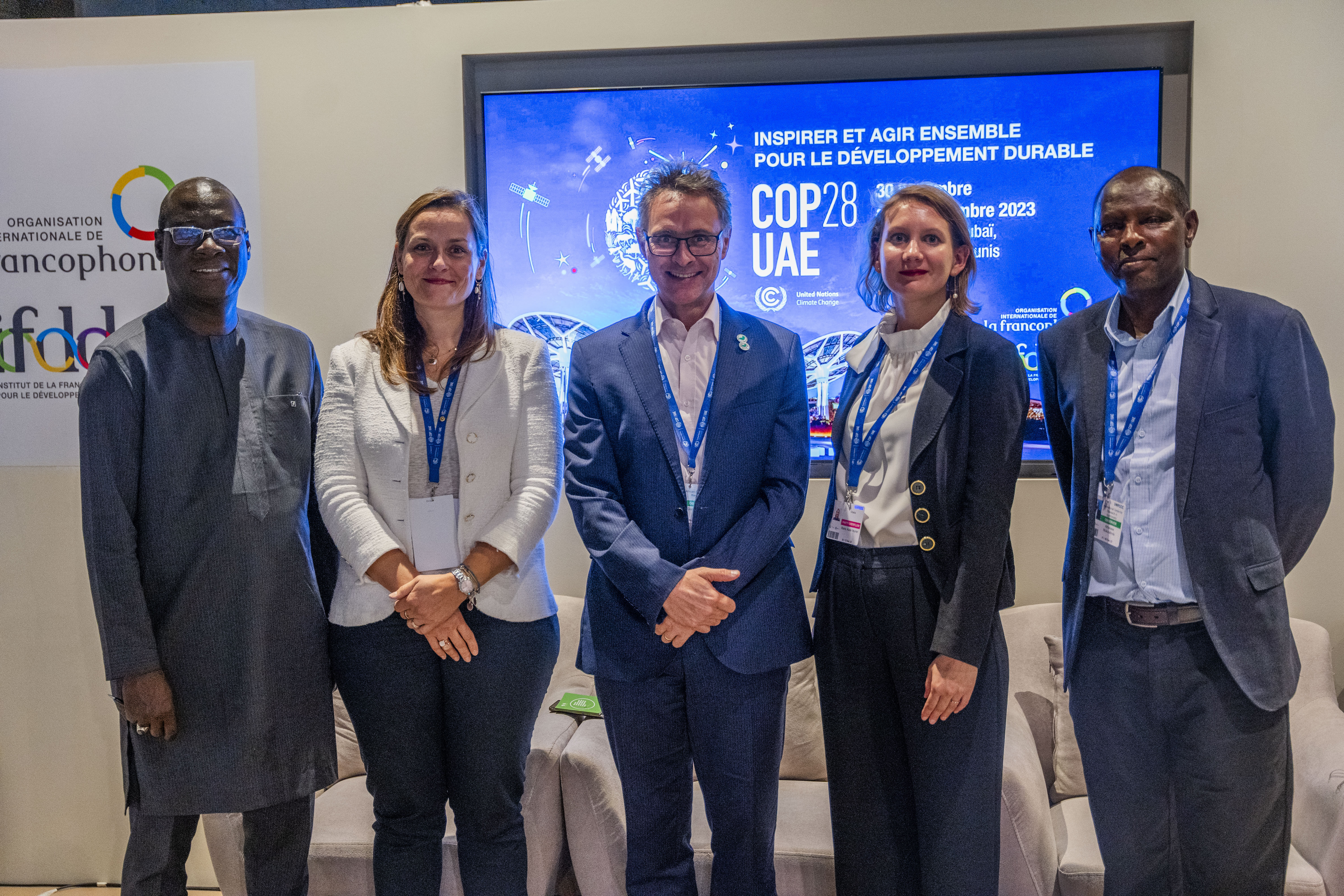
On December 3, the Africa Climate Change Fund convened a panel discussion to share projects results at the margins of the COP28 Climate Summit in Dubai, United Arab Emirates at the Francophonie Pavilion.
The purpose of this hybrid side-event, which targeted francophone countries was to present the ACCF, the modalities for accessing funding and to share experiences of the Fund’s grantees. The event also aimed at engaging with potential new beneficiaries with a focus on increasing the participation of Francophone countries in future calls for proposals.
Mrs. Cecile Martin Phipps, Executive Director of the ‘Institut de la Francophonie et du Développement Durable’ in her opening remarks commended the African Development Bank (the Bank) for choosing to host the event at the Francophonie Pavilion. She expressed her hope that more entities from Francophone countries will benefit from the ACCF.
Ms. Eve Sandra Beremwoudougou, Pan-Africa and Regional Development and Senior International Assistance Officer representing the Global Affairs Canada (GAC) at the ACCF joined virtually and in her remarks also commended the ACCF for the “remarkable results achieved so far” and expressed GAC’s “satisfaction and commitment to strengthening its support for more actions in Francophone countries with stronger emphases on women in the climate change sectors”.
Mr. Emile Kouakou, Programme Officer at the ACCF, introduced the ACCF emphasizing its funding modalities and highlighted some results from projects in Mozambique, Uganda/Kenya, Cote d’Ivoire, among others. He shared insights with the attendees of the various calls for proposals and their focus and how these grants have led to unlocking more climate finance for countries such as Cote d’Ivoire, Kenya, Benin, among others. He emphasized the important role of ACCF in addressing gender inequality in climate change projects under the third Call for Proposals and shared briefly on the upcoming fourth call for proposals to be launched in 2024 on methane abatement sectors such as agriculture and livestock, oil and gas and waste and called on interested eligible institutions to apply.
Mr. Gareth Phillips, Manager of the Bank’s Climate and Environment Finance Division introduced the ACCF-funded project titled “Cocoa Livelihood Resilience – Piloting the Adaptation Benefits Mechanism (ABM) in Cote d’Ivoire”. This project aimed to develop the ABM methodologies for the cocoa sector and to mobilize private sector finance for climate adaptation. It also capacitated and empowered 400 smallholder cocoa farmers in Cote d’Ivoire with a set of sustainable agroforestry measures to become more climate resilient by protect cocoa trees and diversifying incomes. The first phase of this project, which received funding from the ACCF has contributed to developing a set of methodology for resilient cocoa production. The project is entering its second phase and will be replicated in additional three cocoa growing countries including Togo, Cameroon, and Ghana.
Dr. Athanase Mukuralinda, Country Director of ICRAF Rwanda showcased the project titled “Integrated Climate smart agriculture actions for accelerating resilience of communities to climate change”. Athanase commented that through the adoption of an integrated approach for implementing climate smart agriculture, this project is strengthening climate resilience and food security and improving livelihoods of farmers vulnerable to climate change in four districts in the Eastern Province of Rwanda. He added that although the project is at an early stage, it has contributed to mobilizing 715 farmers including 286 women, 215 men and 214 youth on the importance of agroforestry and tree diversification. Also, 50 lead farmers have been trained, including 20 women on gender mainstreaming and agroforestry, nursery preparation and maintenance. Other trainings include water ponds and irrigation equipment operation, maintenance, and management. The project is equally contributing to reforestation of lands through tree planting while supporting livelihoods by promoting drought-tolerant high-yielding crop varieties.
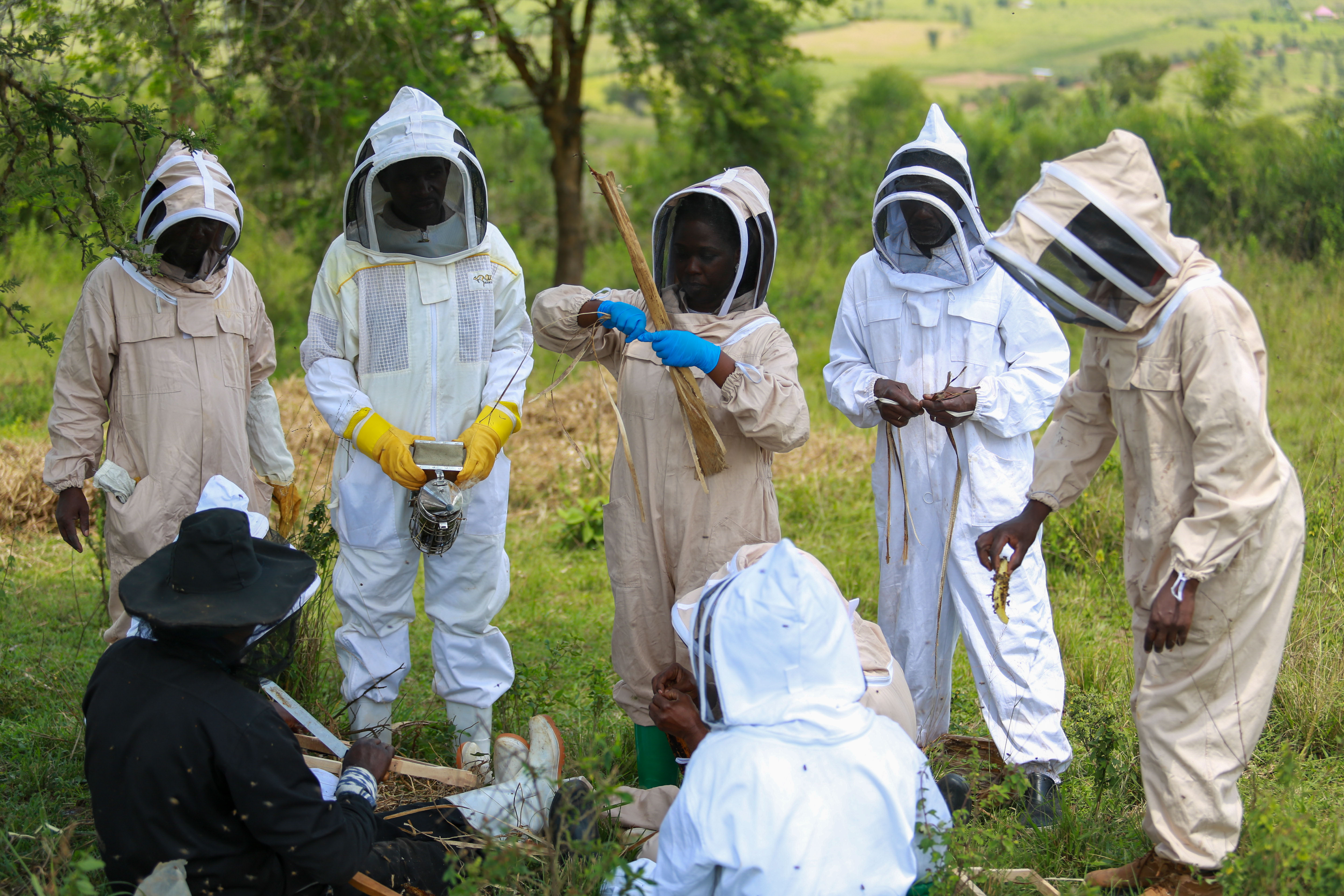
Mrs. Marie Veyrier, Development Director of the Global Shea Alliance shared progress on the project titled “Towards Climate Resilient Shea Communities in Togo and Burkina Faso”. The project which is in its first year aims to increase the climate resilience of 7,500 women shea collectors and their communities, through an increase in income from natural products (shea and apiculture), improved and community-led parkland management. She added that so far, the project has contributed to establishing 11 partnerships with private sector entities to secure co-investment and establish market links and coaching. Also, the project has empowered 357 women leaders on the development and management of cooperatives, development of SMEs.
Mrs. Sophie De Coninck, Head of the LoCAL-UNCDF Mechanism presented the project titled “Local Climate Adaptive Living Facility (LoCAL) Project -Kingdom of Lesotho Phase I and Republic of Benin Phase II” which aims to improve the climate resilience of communities and local economies in Lesotho and Benin by increasing investments in climate change adaptation in target areas. Sophie introduced the funding mechanism of LoCAL, which enables local authorities to support implementation of the Paris Agreement, NDCs, NAPs and SDGs. In Lesotho, over 115 people, made up of 51 females and 64 males, were trained/sensitized on climate change issues. In Benin 24 adaptation investments were implemented in 9 communes directly benefiting 71,000 people, 55% of whom were women. In Lesotho, 16 water supply systems and one range management adaptation investment were implemented in the target community councils, benefiting about 6,000 people, mostly women. The project is entering its final stage for phase I and the second phase will be executed in Lesotho with support from the ACCF and GIZ. In Benin, the project supported GCF proposal was approved to scale up LoCAL to other communes.
The panel discussion was moderated by Dr. Arona Soumare, Principal Climate Change and Green Growth Officer at the African Development Bank. Arona welcomed participants to the session and commented that this event is part of a series of events that the African Development Bank is organizing to engagement a wide range of stakeholders on its climate change agenda.