
A powerful video kick-started the dialogue, shifting perspectives on disability. It highlighted real-life stories, emphasizing that disability isn't solely an individual's impairment but a consequence of societal barriers. The message was clear: break down these barriers, ensure unconstrained participation, and achieve equality.
Paul Mugambi, a visually impaired advocate, shared compelling narratives. He spoke about digital accessibility, climate change, mental health, and disability inclusion, resonating with the diverse audience. Mugambi painted a vivid picture of the challenges faced by 1.3 billion people with disabilities globally. He identified five major barriers: attitudinal, environmental, communication, institutional, and financial.
Mugambi introduced "techno-ableism," the alarming exclusion of persons with disabilities in climate-related technology development. He highlighted the absence of tailored warning systems for emergencies, emphasizing the need for accessible information. As a Blind Innovator, he unveiled a prototype service utility designed to address power outages during emergencies, catering to both disabled and non-disabled communities.
Lucy Mulombi, a grassroots disability-inclusive feminist, shared her experiences navigating climate change. While acknowledging recent advancements in appointing women with disabilities to Climate Change Committees, she highlighted persistent challenges faced by grassroots women and girls. She expressed concerns regarding financial barriers and the detrimental effects of climate change on healthcare services and gender-based violence, particularly affecting women with disabilities.
Josephat Ireri, a gender expert, elaborated on opportunities available for people with disabilities in a changing climate. He focused on legal frameworks, international perspectives, and specific initiatives within Kenya, emphasizing the importance of conventions and agreements that highlight the human rights of persons with disabilities. He delved into employment prospects, vocational training, entrepreneurship, and stressed the significance of advocacy and representation.
Participant engagement and parting reflections encapsulated essential themes: The need for inclusive language, disability champions in climate discussions, unity in confronting climate challenges, accessible venues, and open communication were all emphasized.
The dialogue concluded with a clear message: Create inclusive spaces, raise awareness, and collaborate to effectively address the challenges faced by people with disabilities in the realm of climate change.
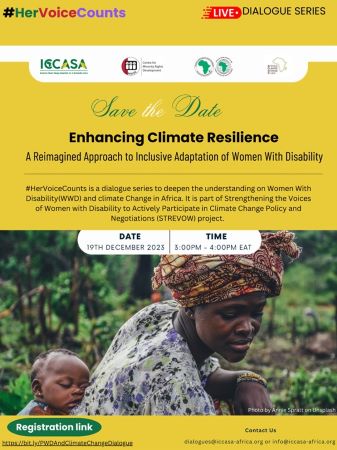
This is part of "Her Voice Counts Dialogue" series implemented under the Strengthening the Voices of Women with Disability to Actively Participate in Climate Change Policy and Negotiations (STREVOW), a three-year project, funded by the ACCF.