

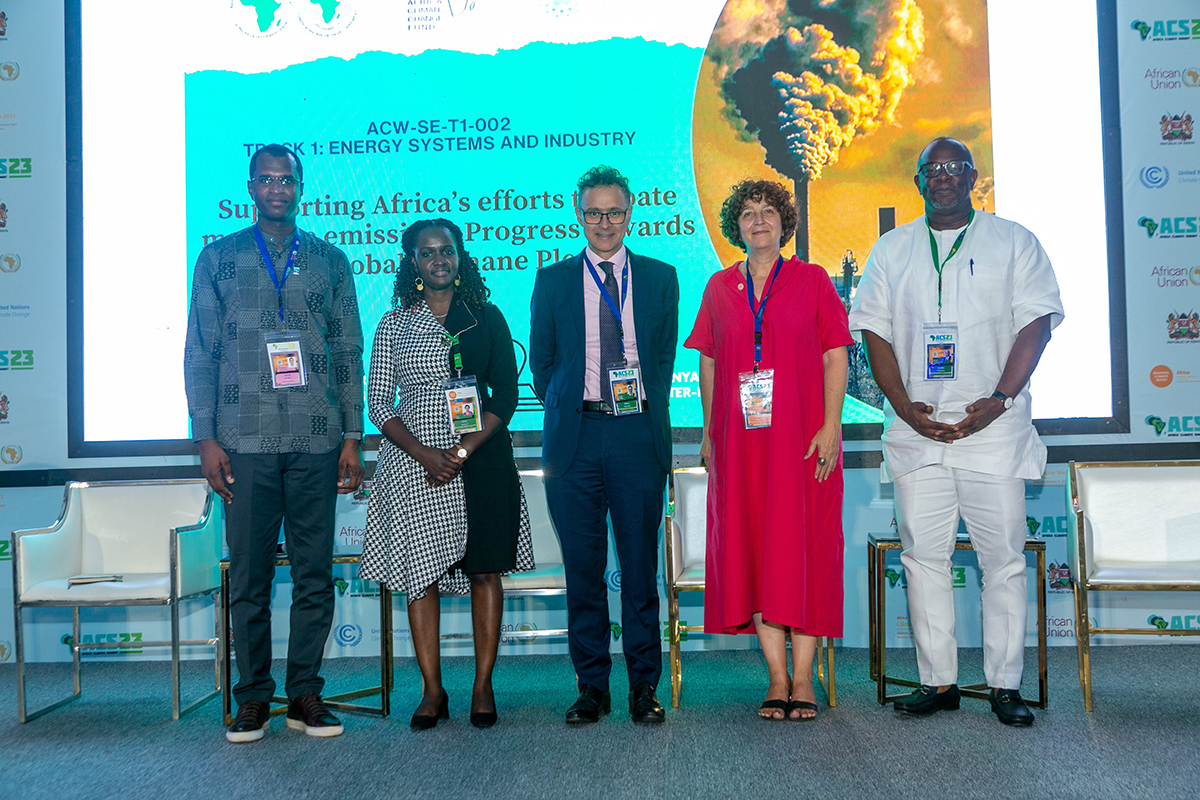
Nairobi, September 7, 2023 – The Africa Climate Change Fund (ACCF) convened key partners, including the Global Methane Hub (GMH), Climate and Clean Air Coalition (CCAC), Clean Air Taskforce and Government of Nigeria to discuss ongoing efforts to abate methane emissions and progress made towards the global methane pledge in Africa. Methane which is a short-lived climate pollutant is responsible for at least one-quarter of global warming, making it critical for limiting global warming.
The panelists discussed ongoing efforts at national and regional levels and their impacts toward methane abatement as well as potential sources of financing. Additionally, the ACCF’s upcoming call for proposals which is funded by the United States Government and other donors of the Fund was discussed as a potential source of technical assistance grants required to support the implementation of national action plans and projects in Africa.
Mrs. Martina Otto, Head of Secretariat CCAC at the United Nations Environment Programme (UNEP) shared that 40 countries globally, including 24 in Africa, have signed the Global Methane Pledge and have developed baseline studies as a tool to helping them understand the methane challenge. Specifically, she indicated that progress has been made with 18 methane roadmaps approved in Africa, which is testament of the continent’s leading role and commitment. She added that UNEP is supporting 17 countries to prepare national plans with emphasis on methane abatement. With regards to sources of financing for methane abatement, Mrs. Otto mentioned that Multilateral Development Banks and philanthropies could provide the financing required.
Mr. Mohammed Aminu, CATF shared the experience of Nigeria which he indicated as the first african country to have a methane guideline followed with Ghana and Cote d’Ivoire. For Mohamed, NGOs are key actors to mobilize resources from every type of funders as long as they are not from government.
Mr. Michael Ivenso, Director of Energy, Transportation and Infrastructure at the International Council under Nigeria's NDC’s and Net Zero Agenda shared that Nigeria has a strong commitment to methane abatement, which is articulated in a national policy developed and implemented by a national council hosted at the Presidency under the climate regulatory authority. Mr. Ivenso added that there is need to mobilize additional resources to co-finance methane abatement and that this should be done through bilateral agreements, development aids, and philanthropic contributions as well as climate funds.
On the other hand, Mr. Gareth Phillips, Manager of the Climate and Environment Finance Division at the African Development Bank (the Bank), emphasized the critical importance of methane abatement linking it to clean air, health, and various co-benefits. He highlighted that methane abatement is cost-positive and there are existing technologies to capture or prevent methane emissions. Gareth urged for increased awareness and resource mobilization efforts. Gareth also highlighted that the Bank has shown a commitment to contributing to methane abatement following COP26 Glasgow Climate Pact and Global Methane Pledge. The Bank has furthered its commitment by securing new contributions from donors of the ACCF through the approval of the Fund’s lifespan to five years (from 2022-2027) and a commitment of US$5 million from the United States Department of States to support methane abatement projects in Africa.
Ms. Rita Effah, ACCF Coordinator and moderator of the session briefly introduced the Fund as a multi-donor trust fund hosted and managed by the Bank with the overall mandate to support African countries in their efforts to transition to climate-resilient low-carbon development. She added that the Fund has launched three calls for proposals which has led to the financing of 28 projects that focus on climate finance readiness and capacity building, small-scale adaptation initiatives as well as on gender transformative climate resilient solutions. Moving forward, Rita concluded that ACCF Secretariat will launch a fourth call for proposals in early 2024 with a focus on methane abatement looking at sectors such as agriculture, livestock, waste and oil and gas. She also called for more contributions from potential donors to enable the ACCF meet the high demand from African stakeholders.
The ACW provided the ACCF and the Bank insights into how it could contribute to methane emissions reductions in key sectors in its Regional Member countries while ensuring productivity gains.