



Under Phase I of the ACCF “Cocoa livelihood resilience project – piloting the Adaptation Benefits Mechanism (ABM) in Cote d’Ivoire”, the World Agroforestry Centre (ICRAF) has developed an innovative methodology to measure, verify and report on the benefits of adaptation action in the cocoa sector, contribution to the Sustainable Development Goals (SDGs), other co-benefits and adaptation finance involved. Upon approval by the independent ABM Executive Committee, hosted by the African Development Bank, the methodology will become public good and will be available for use free-of-charge for similar projects in the cocoa sector worldwide. The project will then also be able to move to Phase II, where the activities will be replicated in at least three other cocoa-growing countries in the region and new finance for their implementation will be mobilized through the ABM.
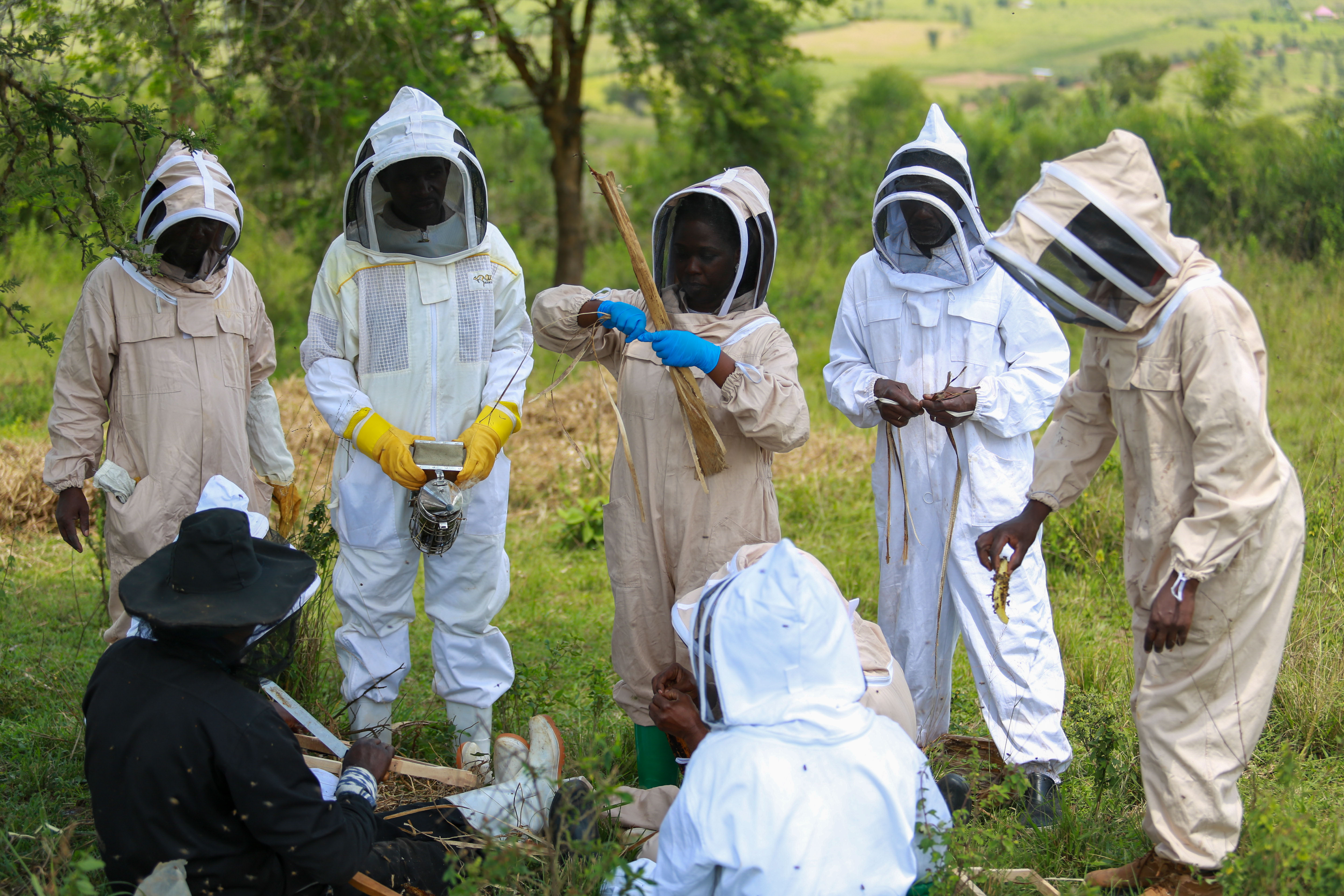
The methodology concerns the application of sustainable agroforestry practices in cocoa plantations for smallholder farmers, such as shade trees planting; intercropping for income diversification; affordable irrigation (bamboo irrigation); and intercropping for food and income diversification-enhancing the resilience of smallholder cocoa farmers in Côte d’Ivoire. Based on years of research and experience on the ground of ICRAF and the international community, these measures are considered an adequate response to the main climate change hazards experienced by the Ivorian smallholders: increasing drought, heat waves, desiccation, exceedance of tolerance thresholds for crops, and temperature variability.
Some of the adaptation benefits include reduced cost of cocoa farm establishment, expressed as US Dollars per hectare; improved rural employment, expressed in number of farmers; extended productivity of cocoa farms, expressed in kilograms of cocoa beans per hectare; complementary farm output, expressed in US dollars per hectare; and avoided land use change, expressed in hectares.
Other co-benefits include biodiversity improvement, expressed in hectares, avoided land use change, expressed in hectares; sustainable land management, expressed in hectares, which is also an SDG indicator and co-benefits for reducing greenhouse gases.
The application of these measures may contribute further to the reduction of pests and diseases, farmers’ labor reduction and the reduction of soil runoff and erosion, and soil fertility improvement, which may be observed on the longer term. The methodology makes provision for, among others:
- Conducting an ex-ante assessment of the expected benefits for informing the adaptation goals and planification;
- Conducting an ex-post assessment of the generated benefits for reporting on the achievements;
- Reporting on the contribution of the generated benefits to SDGs, National Strategies (NDCs and NAP) of host countries, and sustainability strategies of private sector stakeholders.
Through the development of this ABM methodology, ICRAF has determined that sustainable and resilient agroforestry projects in the cocoa sector may contribute to the implementation of multiple SDGs, such as 1. No Poverty; 2. Zero hunger; 5. Gender equality; 8. Decent work and economic growth, 13. Climate Action and 15. Life on Land.