


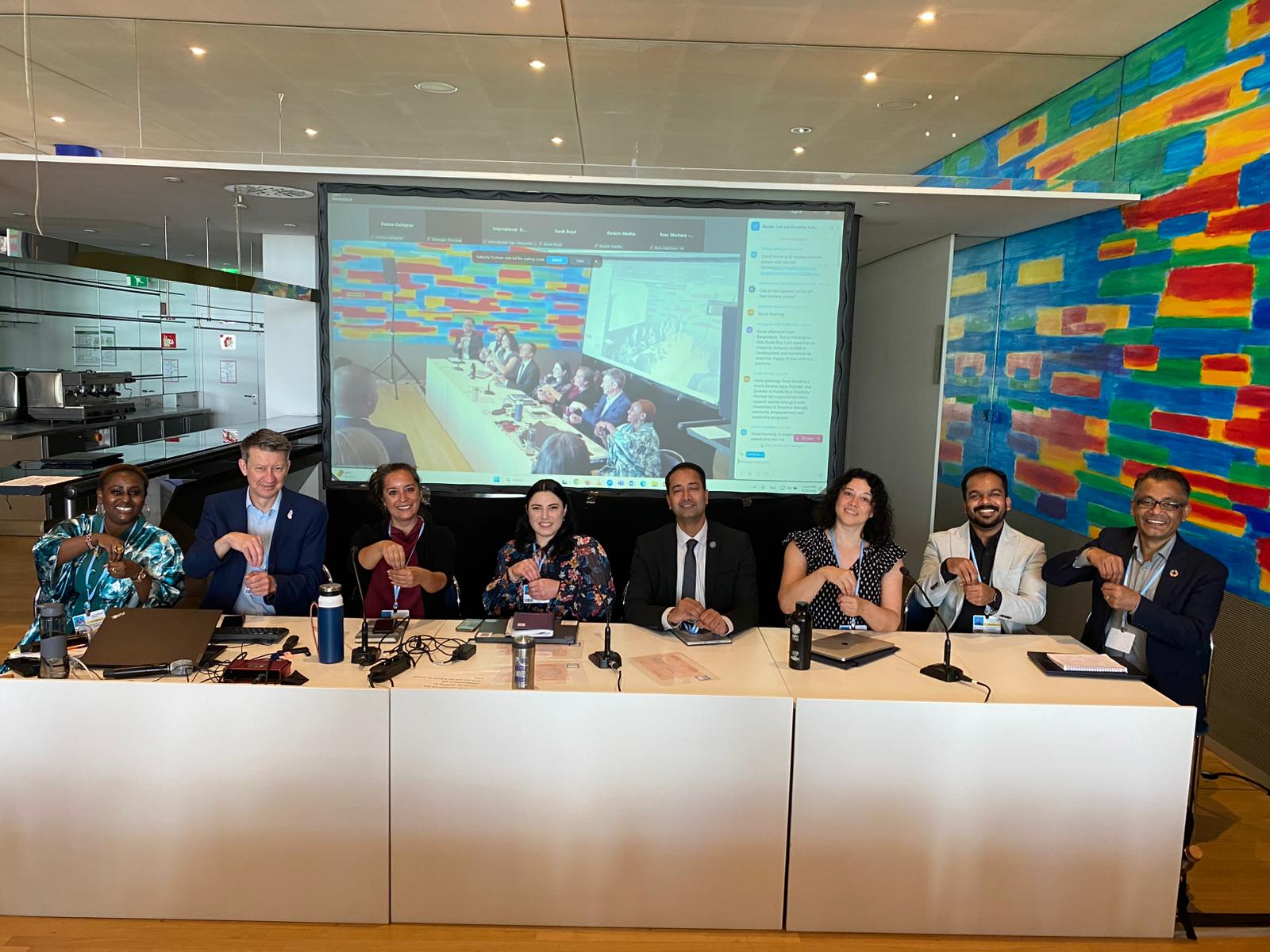
In June 2025, during the 62nd sessions of the UNFCCC Subsidiary Body for Implementation (SBI) and Subsidiary Body for Scientific and Technological Advice (SBSTA) in Bonn, Germany, the Strengthening the Voices of Women with Disabilities to Actively Participate in Climate Change Policy and Negotiations (STREVOW) project marked a milestone contribution to advancing disability inclusion in climate action. Women with Disabilities supported by STREVOW were part of the delegation actively making recommendations on how to embed disability inclusion within climate negotiations—challenging decades of systemic invisibility.
The sessions spotlighted key areas of progress. The hybrid side event “Gender-just and Disability-Inclusive Climate Action” underscored the urgent need for accessible and inclusive solutions to build a climate-resilient world. Equity, justice, and inclusion were recurring themes, particularly emphasized by developing countries and civil society groups. Calls for locally led solutions gained traction, especially within the Just Transition Work Programme (JTWP) and Loss and Damage (L&D) frameworks, with SB62 reinforcing the importance of multi-level action by governments. Other highlights included advancing the operationalization of the Global Goal on Adaptation (GGA), reviewing the extended Gender Action Plan (2024–2034), and renewed commitments to climate finance and updated Nationally Determined Contributions (NDCs).
Disability inclusion gained meaningful ground, with calls to integrate the voices and needs of persons with disabilities into climate strategies, early warning systems, and adaptation programmes. “Our presence at SB62 was a direct challenge to decades of systemic invisibility,” said Josephine Mwatibo, a woman with disability in the delegation. “For too long, women with disabilities, particularly from the Global South—have been excluded from climate negotiations, even though we bear the brunt of climate impacts. This time, we were at the table. And we made it count.”
Yvonne Ndanu, Senior Gender Officer, noted, “As a Gender Negotiator, I was encouraged to see discussions not only emphasizing women’s leadership and gender balance in climate negotiations but also the importance of financing and data systems that reflect gender realities. The process ahead remains challenging, but SB62 laid a promising foundation.”
The STREVOW project, implemented by Inclusive Climate Change Adaptation for a Sustainable Africa (ICCASA) and the Centre for Minority Rights Development (CEMIRIDE) with funding from ACCF, remains committed to amplifying these voices. STREVOW’s continued support ensures that women with disabilities not only gain a seat at the negotiation table but also shape the climate policies that affect their lives and communities.