



By Rita Effah and Lucy Debrion
Climate change is a well-established reality all across the world, and in Africa, its impacts are being felt locally, right down to the village level in all communities. This is why locally led and implemented climate adaptation measures are crucial.
In most countries, sub-national governments have the unique responsibility of leading and undertaking development projects in their communities. They must be increasingly involved in efforts to strengthen climate resilience.
The African Development Bank’s approach to addressing climate change impacts is that efforts should be collaborative, involving national and sub-national governments and citizens.
In April 2021, the Bank—as Administrator of the Africa Climate Change Fund— and the United Nations Capital Development Fund (UNCDF) signed an agreement to support climate change projects in two countries. These were the first phase of the Local Climate Adaptive Living Facility Project in the Kingdom of Lesotho, and the second phase of this project in the Republic of Benin.
Running through 2024, the project is mobilising US$ 2.13million (with the Africa Climate Change Fund providing grants of $997,524) and co-financing of $768,000 from the UNCDF and $360,000 from the government of Benin. The Africa Climate Change Fund finance is supporting national institutions and stakeholders in demonstrating effective utilization of climate finance at the local level.
From the 29th of May to the 10th of June 2023, the Africa Climate Change Fund Secretariat conducted a supervision mission to Benin and Lesotho to monitor the project’s progress. The mission sought to assess the implementation of planned activities and identify any obstacles hindering the achievement of the project's overall outcome. That stated outcome is an increased transfer of climate finance to local governments through national institutions and systems for building verifiable climate change adaptation and resilience.
This project is improving the climate resilience of communities and local economies in four community councils in Lesotho, namely, Khoelenya, Lithipeng, Qhoasing and Senqunyane; and nine communes in Benin, namely Boukoumbé, Copargo, Toukountouna, Malanville, Karimama, Banikoara, Cobly, Matéri and Ouaké. It is increasing investments in climate change adaptation through improved access to climate finance for local governments.
In the Republic of Benin, 24 adaptation investments were made in nine communes through performance based climate resilience grants. They brought direct benefit to some 71,000 people, 55% of whom are women.
This is facilitated by the performance-based climate resilience grant mechanism, which encourages communes and districts to adopt a cross-sectoral approach to climate change adaptation in their planning, budgeting, and implementation of their local development programs. This mechanism also encourages the use of a bottom-up approach by involving beneficiary communities.
During the Africa Climate Change Fund Secretariat supervision mission, it was observed that in both Benin and Lesotho, communities were at the center of the planning. They first assessed their climate vulnerabilities and risks and then developed a menu of adaptation measures prioritized between two- to three-year in-community development plans. Following each round of annual performance-based climate resilience grant disbursements, along with the national budgets for local governments, the use of these funds was audited, improving transparency and accountability
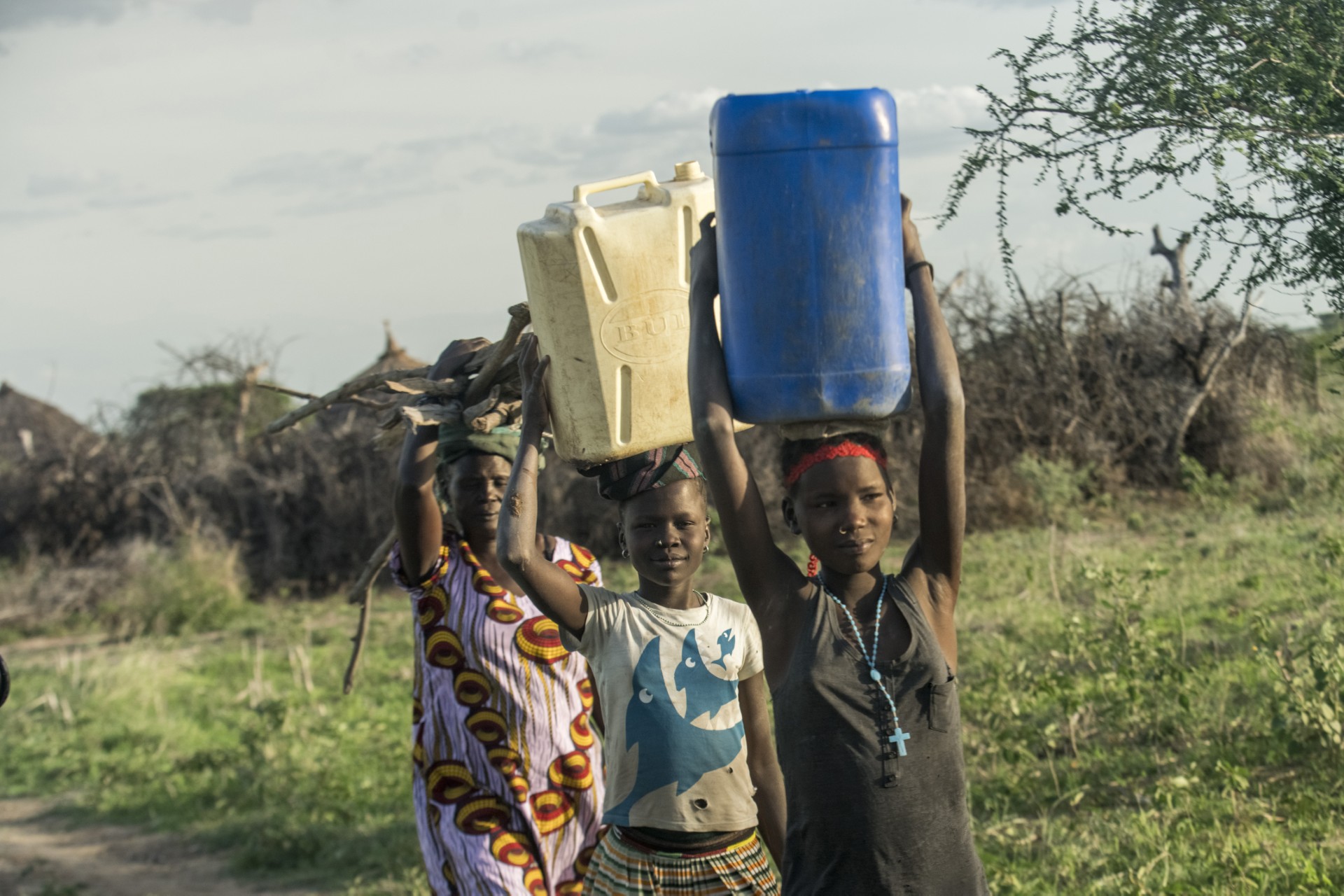
In Lesotho, 16 adaptation investments were made. Most pertained to clean water access. Implementation was in the target community councils, benefiting some 6,000 people, most of whom were women.
Training and implementation of performance-based climate resilience grants are strengthening the capacities of local governments and stakeholders. For instance, in Benin, some 35 people were trained on the Local Information System for Adaptation and its potential use for local climate adaptation planning and mainstreaming. Among them were local government officials, others from decentralised state services, and prefects.
In Benin, the government is blending its own financing with the performance-based climate resilience grants to provide more support to the selected communes.
In Lesotho, while efforts to align local with national budgeting and planning purposes have improved, there is still more to be done to co-finance or blend performance-based climate resilience grants with the Community Development Fund. This fund is part of the annual national budget for community councils and addresses both development needs and climate resilience.
In Lesotho, 115 people were trained on climate. The breakdown of trainees was: 51 females and 64 males.
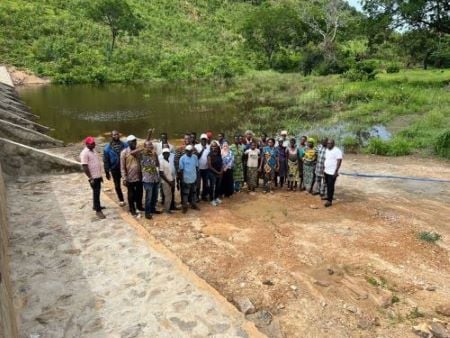
The Africa Climate Change Fund Secretariat supervision mission visited a dam constructed to retain water for farming in Kouwetakoungou village in Benin’s commune of Boukoumé. Initially, constructed in 2018, as a smaller dam and water reservoir, it proved inadequate. In 2023, an extensive excavation was conducted, and a robust concrete dam and an irrigation system were constructed with support from the Africa Climate Change Fund and co-financing from the Beninese government. This dam now ensures reliable access to water for irrigation. It allows farmers in the enclave to farm over 5 hectares of cultivated land all year round. The total production—primarily of tomatoes, peppers, onions, cabbage, and carrots—increased from 20 to 37 tons in 2022.
“Before the project, we faced water scarcity, and our farming efforts were discouraged. But now, with the rehabilitated dam, we have hope for a longer production period." - Group of female gardeners, Kouwetakoungou village, Benin.
"We are grateful for the rehabilitation works, as it has significantly increased our farming season and allowed us to produce more. Our agricultural products are now sold in local markets, benefiting our community." - Beneficiary in Benin.
During the Lesotho mission, the team visited three villages that had all experienced the positive impacts of gaining access to clean water services. Local officials talked about the difficulties in accessing water, which has further been impacted by climate change.
All the beneficiaries consulted during the mission talked about the positive impacts of the climate adaptation measures conducted in their communities. What showed clearly was that engaging effectively with local communities in a participatory manner to analyze their climate vulnerabilities and jointly plan climate adaptation interventions, results in greater acceptance by and support from the community.
The Africa Climate Change Fund’s support will end in April 2024. However, efforts are already underway in both Benin and Lesotho to scale up the performance-based climate resilience grant mechanism.
There are some key takeaways from the mission. One is that despite progress made so far, there are still challenges around reducing fragmentation in terms of access to finance domestically to address climate change issues. There is also the need to further strengthen coordination between local governments and line ministries to leverage national budgets and external climate finance. This will help to address both development and climate change needs for citizens.
Rita Effah is the Africa Climate Change Fund Coordinator. Lucy Debrion is the Fund’s Programme Officer.